How To Plan Spotting Uneven Tyre Wear Before It Becomes Expensive
A practical step-by-step guide to how to plan spotting uneven tyre wear before it becomes expensive, including preparation, instructions, common issues, tips, and next steps.
How To Plan Spotting Uneven Tyre Wear Before It Becomes Expensive
Uneven tyre wear is a silent warning that your vehicle's suspension, alignment, or tyre pressure is out of balance. If ignored, it can lead to premature tyre replacement, poor handling, and even dangerous blowouts. This guide walks you through a practical, step-by-step inspection routine you can do at home, using simple tools like a tread depth gauge and a ruler. You'll learn how to identify patterns like edge wear, center wear, or cupping, and what each pattern reveals about your car's health. By catching issues early, you can often fix them with a simple alignment or pressure adjustment, saving you from expensive surprises down the road. Regular checks, at least once a month and before long trips, are the key to even wear and a smooth, safe ride.
Fast Answer
- Check tyre pressure monthly with a reliable gauge and adjust to the vehicle manufacturer's recommended PSI, found in the owner's manual or on the driver's door jamb sticker.
- Inspect tread depth and look for uneven wear patterns every 1,000 miles or before a long trip; if you see scalloped edges or bald strips, book a wheel alignment and rotation immediately.
Before You Start
- A digital or analogue tyre pressure gauge – these are inexpensive and far more accurate than the ones at petrol stations, so always keep one in your glovebox.
- A tread depth gauge that reads in 32nds of an inch – this small tool costs little and helps you spot wear before it becomes dangerous.
- A 6-inch ruler or a piece of chalk to check for sidewall bulges and to mark suspicious spots on the tyre.
- A clean, dry, level surface like a garage floor or a quiet car park, plus a torch to inspect the inner edges of the tyres.
Step-by-Step Instructions
Check and Correct Tyre Pressure First
Begin by ensuring tyres are cold – that means the car hasn't been driven for at least 3 hours. Use your tyre pressure gauge to measure each tyre, including the spare if you have one. Compare the readings to the manufacturer's recommended pressures, which you'll find on a sticker inside the driver's door frame or in your owner's manual. If any tyre is low, inflate it to the correct level; if it's over, let some air out. Record the pressures on a piece of paper. This step is crucial because under-inflation wears the outer edges, while over-inflation wears the center. By starting with the correct pressure, you eliminate the most common cause of uneven wear and set a baseline for your visual inspection. Remember that pressure can drop as tyres cool, so always check cold.
Measure Tread Depth in Multiple Spots
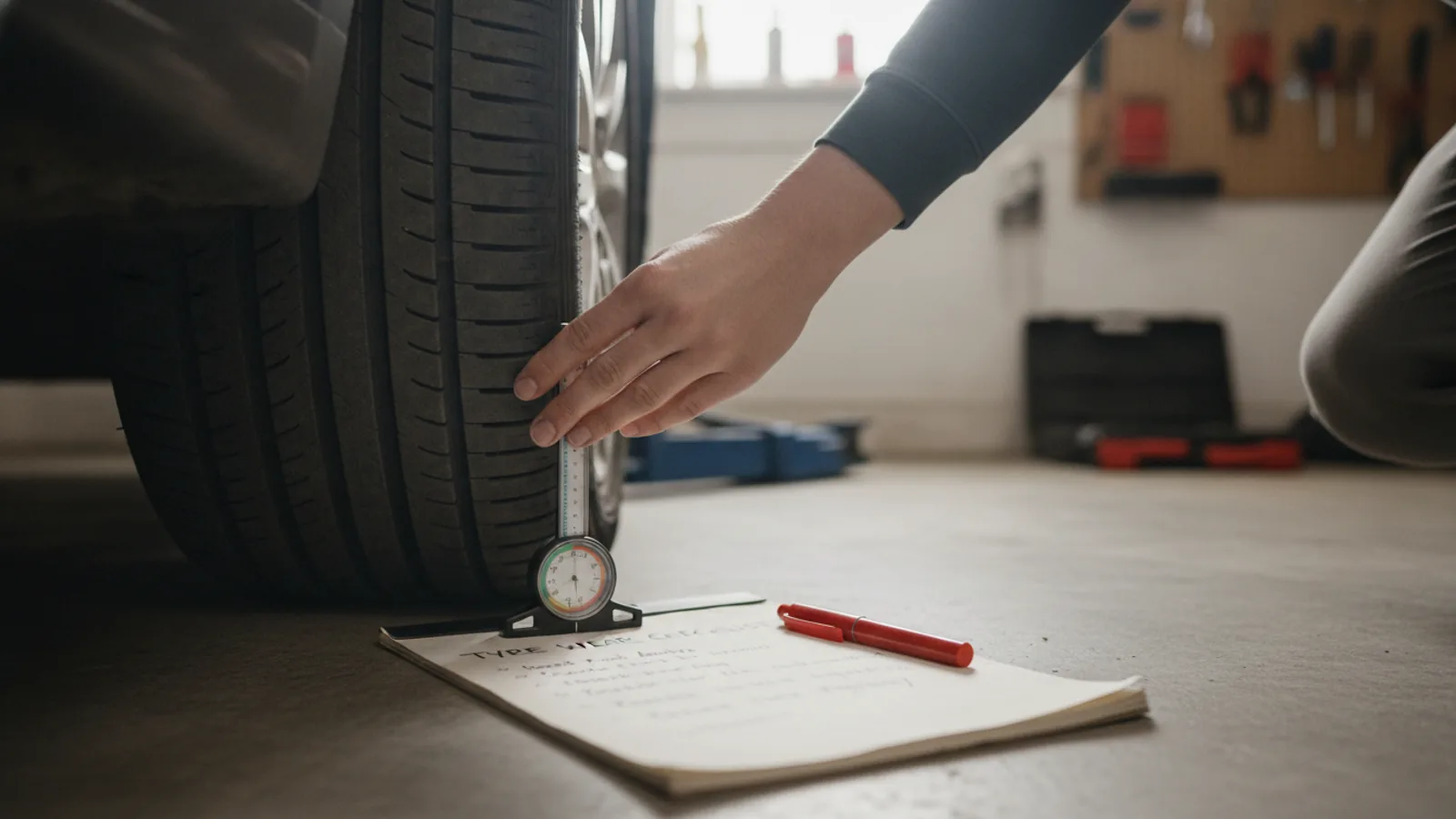
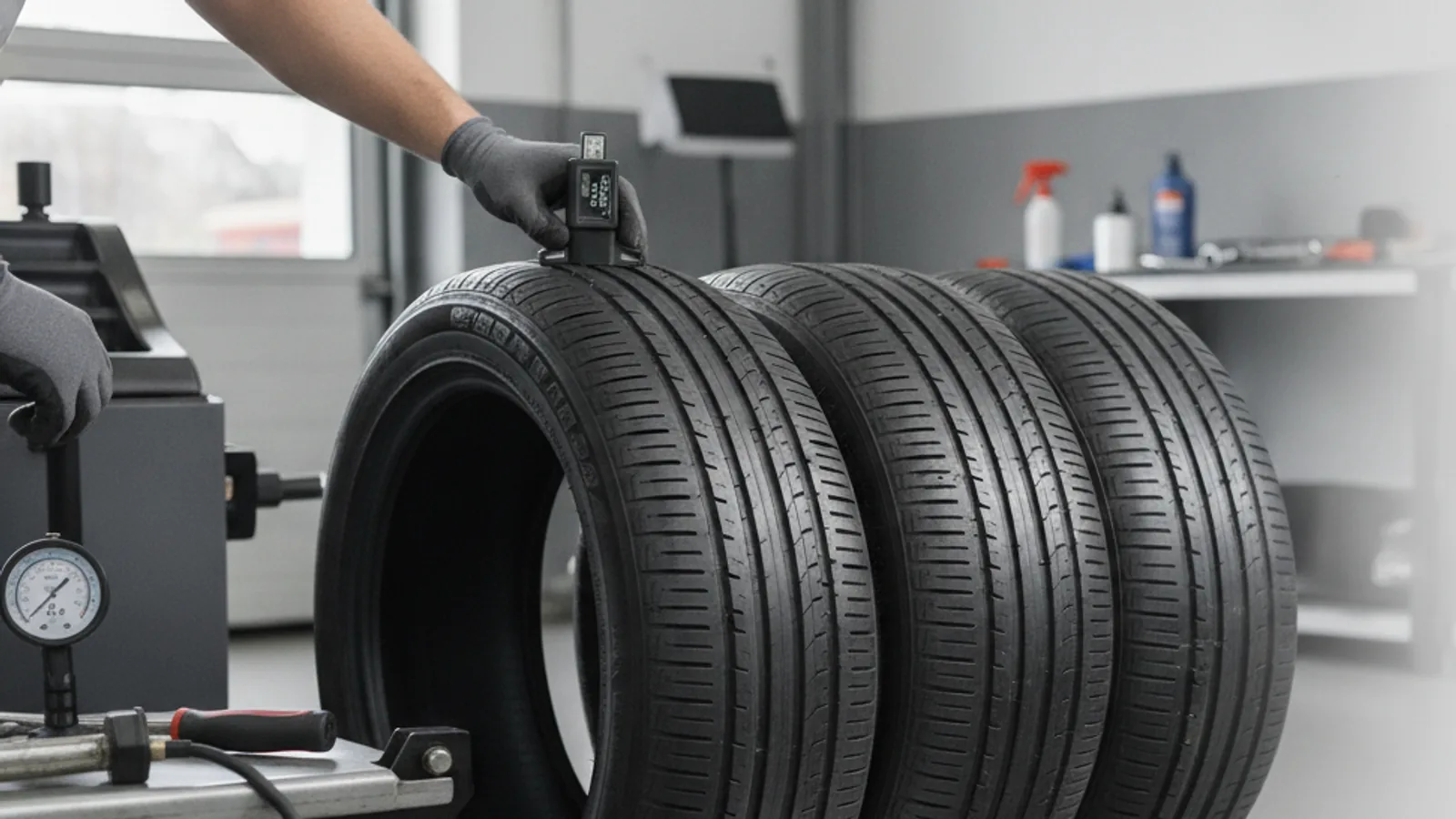
Use your tread depth gauge to measure the depth in the center of each tyre and both shoulders (the inner and outer edges). Press the probe firmly into the tread groove, making sure it sits on the base of the groove, not on a wear indicator. Take at least three measurements per tyre – left, center, and right – and note the readings. If any measurement is 2/32 of an inch or less, the tyre is legally worn out and must be replaced. But even if the total depth is legal, look for differences across the tyre: a center reading that's 4/32 lower than the edges indicates over-inflation, while edges that are lower than the center indicate under-inflation. These differences are your first clue that something is off, and they help you pinpoint the exact cause before it gets worse.
Inspect for Edge Wear and Scalloping
Run your hand over the tread surface, feeling for roughness. Then look closely at the inner and outer edges of each tyre, using your torch to see the inner tread on the front wheels by turning the steering wheel to full lock. Look for one shoulder that is worn down much lower than the other – this is a classic sign of a misalignment. Scalloped or cup-shaped dips that appear at regular intervals around the tyre often indicate a worn shock absorber or a balance issue. Feel the tread with your fingertips: if you feel alternating high and low spots, that's cupping. This pattern can't be fixed by rotation alone – you need a mechanical check. Identifying these patterns early means you can address the root cause, saving you from buying a new tyre sooner than necessary.
Look for Bulges, Cuts, and Cracks
Carefully inspect the sidewalls of all tyres, as well as the tread surface, for any bulges, blisters, cuts, or cracks. Run your hand around the sidewall, feeling for any bumpiness or soft spots. Pay special attention to the area where the sidewall meets the tread, as this is a common spot for impact damage. If you find a bulge, you must replace the tyre immediately – a bulge means the internal structure is weakened, and it can blow out at any moment. Small cuts and cracks may not be urgent, but they can allow moisture to reach the steel belts, leading to rust and eventual failure. Any damage to the tyre's integrity makes it unsafe, regardless of tread depth. This check also helps you identify tyres that are close to their end-of-life, so you can plan replacements before they fail.
Rotate Your Tyres According to Pattern
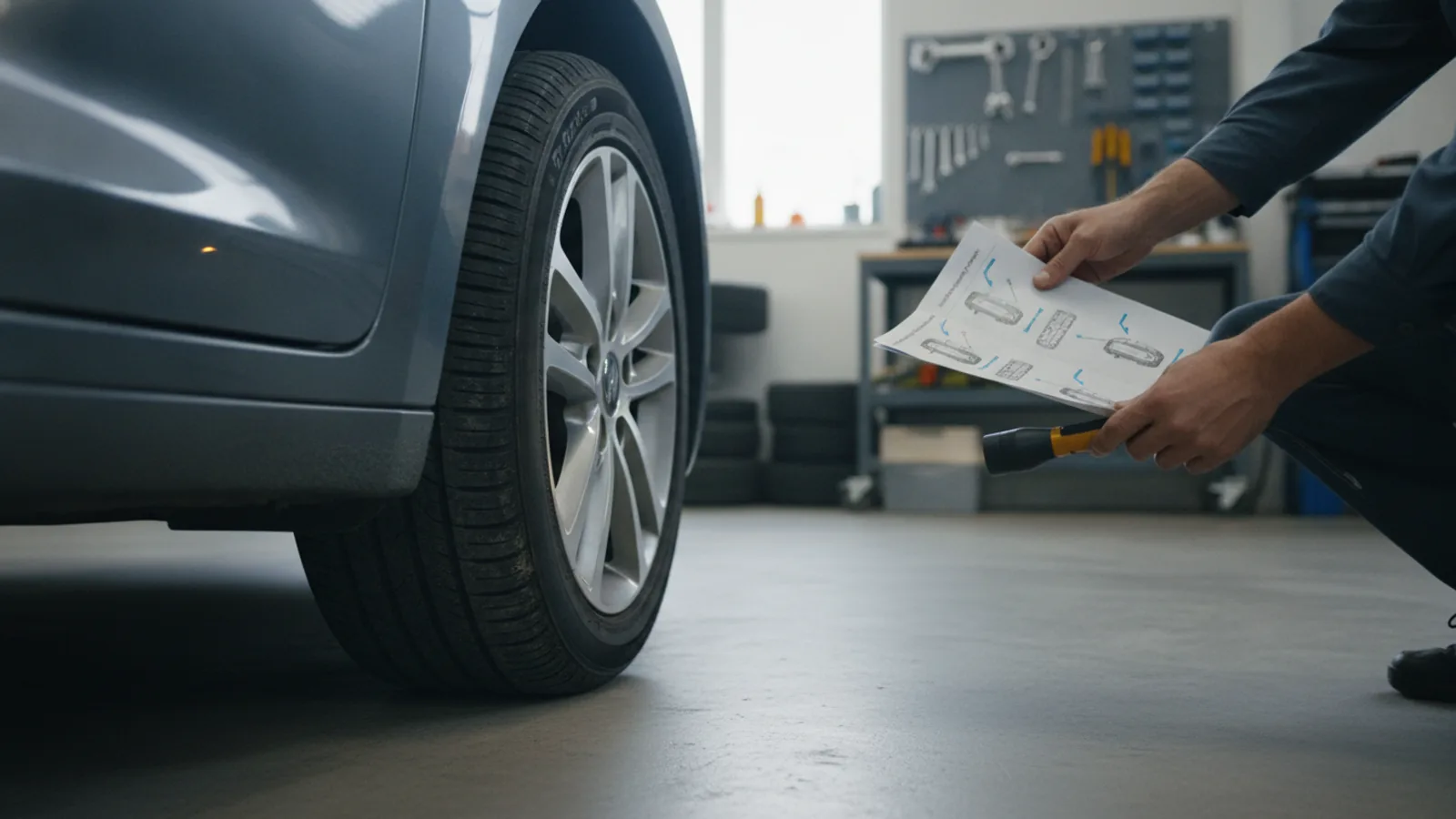
Check your owner's manual for the recommended rotation pattern – it may be front-to-back, rear-to-front crossed, or a specialized pattern for directional tyres. Most vehicles use different front and rear pressures, so rotation ensures even tread wear across all four wheels. If your tyres are non-directional and have uniform size, the classic cross pattern (front left to rear right, front right to rear left) works well. For directional tyres, keep them on the same side and move front-to-back. After rotating, re-inflate all tyres to the correct pressure, because front and rear may require different values. Rotation allows every tyre to experience different loads and wear patterns, extending the life of each tyre and giving you more consistent handling. If you're not confident, ask a professional to do it – but it's a simple task.
Document Wear Patterns for a Diagnosis
After inspecting all four tyres, take a piece of paper and draw a simple diagram of each tyre. Mark the areas of wear – e.g., a shaded spot on the outer edge of the front left. Note the tread depth measurements you took. This documentation helps you see patterns over time and supports any conversation with a mechanic. For example, if the outer edge of both front tyres is worn, that suggests toe-out misalignment. If only one inner edge is worn, it could point to a bad ball joint. Use your notes to decide if you need a professional alignment or a suspension check. Regular documentation also helps you track how quickly wear is progressing – if it's fast, you have a serious issue that needs immediate attention.
Quick Reference
| Situation | Action | Why it helps |
|---|---|---|
| You notice the outer edges of both front tyres are worn down more than the center. | Book a wheel alignment for your front axle, and also ask the technician to check the toe and camber settings – mention you've seen edge wear. | This pattern often indicates negative camber or excessive toe, which can be corrected by a professional alignment to stop further wear. |
| Your tyre shows a scalloped or cupped pattern spaced evenly around the tread. | Inspect your shock absorbers and struts for leakage or excessive bounce – press down on the car's corner and see if it settles after one bounce. | Cupping is usually caused by worn suspension components, not by alignment, so fixing the shocks is necessary to prevent further tyre damage. |
| The centre of the tyre tread is bald while the edges still have good depth. | Check your tyre pressure immediately – over-inflation is the likely culprit. Deflate to the manufacturer's recommended level using your gauge. | Over-inflated tyres bulge in the middle, causing the centre to wear faster. Correcting pressure restores even contact and prevents premature replacement. |
Common Issues
- Tyre pressure is always low in one tyre even after inflating to the correct level.: Apply a soapy water solution to the tyre and look for bubbles – if you find a leak, take the tyre to a professional for a patch or replacement. Also check the valve cap for a tight seal.
- You feel a vibration in the steering wheel at certain speeds, but tyre wear looks even.: Have a shop balance the tyres – this involves adding small weights to the rim to ensure the tyre rotates smoothly. Also check wheel hub for excessive play.
- Your tyres are wearing quickly on one side only, despite regular rotations.: Get a full suspension inspection – a failing control arm, ball joint, or tie rod can cause misalignment that no rotation can fix. A mechanic will check all components and replace worn parts.
Advanced Tips
- If you often drive on rough roads, consider a more frequent inspection schedule – every 500 miles – as potholes can cause sudden misalignment or impact damage.
- Use a digital tyre pressure monitoring system (TPMS) if your car doesn't have one – these small sensors give real-time readings and alert you to slow punctures or temperature changes.
- After repairing a puncture or replacing a tyre, always have the wheel re-checked for balance and alignment – it's a small cost that prevents future uneven wear.
Final Checklist
- Check tyre pressures (including spare) when tyres are cold at least once a month.
- Measure tread depth in three spots per tyre and record the numbers for future comparison.
- Inspect sidewalls for bulges, cuts, and cracks – if found, replace the tyre immediately.
- If you notice any uneven wear pattern, schedule an alignment or suspension check within two weeks.
FAQ
How often should I rotate my tyres?
Most manufacturers recommend rotating tyres every 5,000 to 7,500 miles, or at every oil change. However, if you notice uneven wear earlier, rotate sooner. Always consult your owner's manual for the exact interval and rotation pattern specific to your vehicle.
Can uneven tyres affect fuel economy?
Yes, uneven wear can increase rolling resistance, which forces your engine to work harder and burn more fuel. For instance, an under-inflated tyre creates more drag, so keeping pressures correct helps maintain efficient fuel consumption and reduces waste.
What is the most common cause of inner edge wear?
Inner edge wear on front tyres is frequently caused by excessive toe-out or camber misalignment. This can happen after hitting a curb or pothole. If you have inner edge wear, get your wheel alignment checked by a professional and have the toe and camber angles adjusted to your car's specifications.