How To Choose Spotting Uneven Tyre Wear Before It Becomes Expensive
A practical step-by-step guide to how to choose spotting uneven tyre wear before it becomes expensive, including preparation, instructions, common issues, tips, and next steps.
How To Choose Spotting Uneven Tyre Wear Before It Becomes Expensive
Uneven tyre wear is a silent warning that your vehicle's suspension, alignment, or inflation is off. Catching it early can prevent premature tyre replacement, poor handling, and costly damage to other components. This guide teaches you how to inspect your tyres regularly, understand the wear patterns, and take corrective action before small issues become expensive repairs.
Fast Answer
- Check your tyres monthly for uneven wear by running your hand over the tread and looking for smooth patches, cupping, or feathering on the edges.
- If you spot uneven wear, have your wheel alignment and tyre pressure checked immediately, and rotate your tyres as recommended in your owner's manual.
Before You Start
- Park your vehicle on a flat, level surface and ensure the tyres are cool, as heat can distort readings.
- Keep a simple tread depth gauge or use the penny test (insert a coin into the tread groove) to measure remaining depth.
- Have a flashlight or good lighting to inspect the tread and sidewalls clearly.
- Keep a notebook or phone to record the date and wear patterns for each tyre, helping you track changes over time.
Step-by-Step Instructions
Set a Monthly Inspection Routine
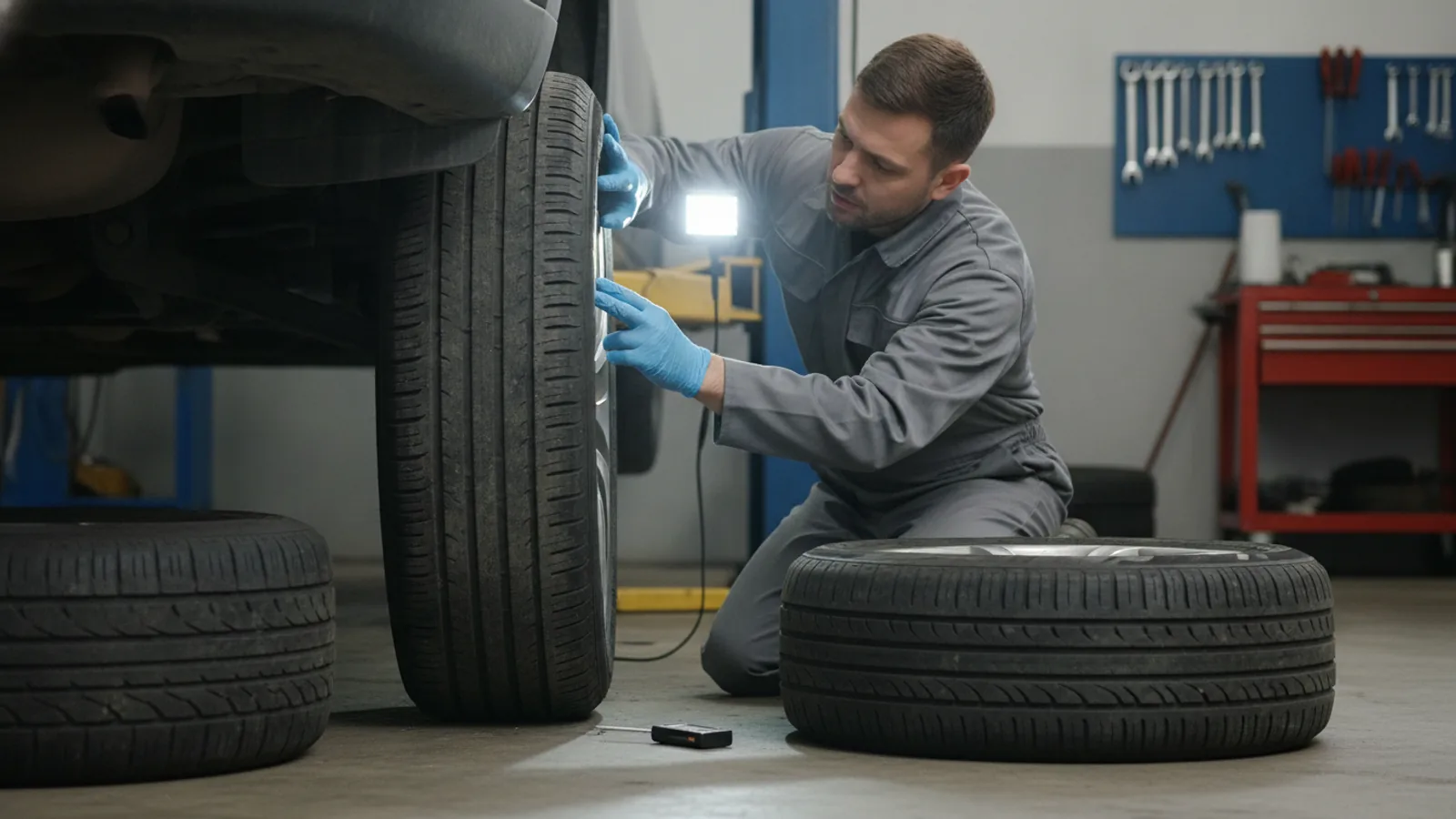
Begin by establishing a consistent monthly check of all four tyres. Choose a day that you will remember, such as the first Saturday of each month, and perform the inspection in a well-lit area or during daylight. Start by examining the overall condition of each tyre, looking for any obvious cuts, bulges, or embedded objects. Then, run your palm over the tread surface from the outside edge to the inside edge. This simple touch can reveal smooth areas, feathered edges, or uneven ridges that are not visible from a standing position. Make it a habit to check the tread depth using a gauge or the penny method at several points across each tyre. Record your findings in the notebook you prepared. By doing this monthly, you create a baseline of normal wear patterns, making it easier to spot any sudden or gradual changes. Consistent inspection is the single most effective way to catch problems before they become costly.
Understand Common Wear Patterns
After reading the tread, learn to interpret what you feel and see. Centre wear—excessive wear in the middle of the tread—usually means the tyre is over-inflated, causing the centre to carry more load. Edge wear on both shoulders indicates under-inflation. One-sided wear, where the inner or outer edge is more worn, often points to a misalignment issue. Cupping or scalloped dips around the tread surface suggest worn suspension parts like shocks or struts. Feathering, where the tread blocks have rounded edges on one side and sharp edges on the other, indicates a toe alignment problem. During your inspection, take a photo of each tyre from the front and side to compare over time. Knowing these patterns is not just about identification; it guides you to the likely cause, which determines the fix. A temporary misalignment fix might be a simple tyre rotation, but a persistent pattern signals a deeper issue needing professional attention.
Check Air Pressure Accurately
Incorrect air pressure is a primary cause of uneven wear. Use a reliable tyre pressure gauge to check the pressure on all tyres, including the spare if your vehicle has one. Always check when the tyres are cold, ideally before driving or at least three hours after. Locate the manufacturer's recommended pressure, usually found on a sticker inside the driver's door frame, the glovebox, or the owner's manual. This pressure is for the original tyre size, so if you have different tyres, verify the correct pressure with the tyre manufacturer or a professional. Inflate or deflate as needed to match the recommended PSI, and do not forget to check the spare, as it often runs lower. Under-inflation causes excessive flexing and heat buildup, leading to accelerated shoulder wear and potential blowouts. Over-inflation makes the ride harsh and causes the centre to wear quickly. Accurate pressure not only prevents uneven wear but also improves fuel efficiency and handling. Record the pressure readings in your log each time.
Rotate Your Tyres on Schedule
Rotation ensures that all tyres wear evenly by moving them to different positions on the vehicle. The recommended rotation interval varies by vehicle and tyre type, but a common guideline is every 6,000 to 8,000 kilometres (or about every 5,000 miles). Check your owner's manual for the specific interval and pattern, as some vehicles have directional tyres that cannot be crossed. The most common rotation patterns include front-to-back on the same side, or a crisscross pattern. To rotate, you will need a car jack, jack stands, and a lug wrench. Always loosen the lug nuts before lifting the vehicle, and never work under a car supported only by a jack. After rotation, check the air pressure again, as positions can affect readings. Regular rotation extends tyre life and maximises traction. If you notice that one tyre is consistently wearing faster, rotation might not fix it, and you should have the alignment and suspension checked.
Inspect Suspension and Steering Components
Worn suspension or steering parts can cause uneven tyre wear that rotation cannot fix. When you inspect your tyres, also check the visible suspension components like shock absorbers, struts, and control arm bushings for signs of oil leakage, excessive rust, or damaged rubber. To check for worn shocks, perform the bounce test: press down on one corner of the vehicle and release; if it bounces more than two times, the shock may be weakening. Also, listen for clunking noises when driving over bumps, which could indicate loose components. If you notice a persistent pull to one side, or the steering wheel is off-centre when driving straight, these are signs of alignment or suspension issues. Tyre wear patterns like cupping often accompany worn shocks. Addressing these components early prevents accelerated tyre wear and maintains ride comfort and safety. If you are not confident in your ability to inspect these parts, have a professional mechanic perform a thorough inspection at least annually or when you notice any symptoms.
Perform Wheel Alignment Adjustments
Wheel alignment refers to adjusting the angles of the wheels to the manufacturer's specifications. These angles—camber, toe, and caster—dictate how the tyres contact the road. Misalignment is a leading cause of uneven tyre wear. Symptoms include the car pulling to one side, off-centre steering wheel, or a vibrating steering wheel. When you detect these signs, or if your monthly inspection reveals one-sided wear, schedule a professional alignment. A typical alignment uses a specialised machine to measure the current angles and adjust them to spec. You cannot do a proper alignment at home without expensive equipment. However, you can ensure that your vehicle's ride height is correct, as sagging springs from worn suspension can cause negative camber and excessive inner edge wear. Also, avoid hitting curbs or potholes, as these can knock the alignment out. Regular alignments, as recommended by your vehicle manufacturer, prevent premature tyre wear, improve handling, and reduce fuel consumption. Remember, alignment is not a repair; it is a precision adjustment that should be checked periodically.
Quick Reference
| Situation | Action | Why it helps |
|---|---|---|
| You notice the centre of your tyre tread is wearing faster than the edges. | Check the air pressure immediately; if it exceeds the manufacturer's recommended PSI, release air to the correct level. | Centre wear indicates over-inflation, which reduces the tyre's contact patch to the centre, causing it to wear quickly and reducing traction. |
| You see excessive wear on both outer edges of your tyres. | Inflate the tyres to the recommended pressure specified in your owner's manual or door sticker, and recheck monthly. | Edge wear usually means under-inflation, as the tyre bulges and puts more load on the shoulders, leading to faster wear and potential overheating. |
| The inner edge of the front tyres is more worn than the outer edge. | Have your wheel alignment checked by a professional, as this is a classic sign of negative camber or toe misalignment. | One-sided wear often results from incorrect camber angle, and ignoring it will cause premature tyre failure and poor handling. |
Common Issues
- Cupping or scalloped wear on the tread surface.: Replace worn shocks or struts, as these are the most common cause. Have a mechanic inspect and replace the suspension parts, then rotate tyres.
- Feathering, where tread blocks have a sharp edge on one side and a rounded edge on the other.: Check wheel alignment, specifically toe. This requires a professional alignment service; do not try to adjust yourself.
- Uneven wear persists even after proper inflation and rotation.: Inspect for loose or worn suspension bushings and ball joints. A professional alignment and suspension inspection can pinpoint the exact cause and repair it.
Advanced Tips
- Consider using hub-centric rings and properly torqued lug nuts to ensure the wheel is mounted true, which prevents vibration that can cause uneven wear.
- If your vehicle has adjustable camber, use a camber gauge to set the negative camber to the factory spec, but remember that too much negative camber always wears the inner edge faster.
- When storing tyres, keep them in a cool, dry place and avoid exposing them to ozone from electric motors or sunlight; stack them flat or on their side, but if on the side, rotate them occasionally to prevent flat spots.
Final Checklist
- Inspect tyres monthly for any signs of uneven wear, cuts, or bulges.
- Check tyre pressure at least once a month and before long trips, using the recommended PSI.
- Rotate tyres every 6,000 to 8,000 kilometres or as recommended by your owner's manual.
- Have a professional alignment and suspension check annually, or if you notice any abnormal wear patterns.
FAQ
How can I tell if my tyre wear is uneven without special tools?
Run your hand across the tread and feel for smooth or slippery areas versus rough ones. Look closely at the tread edges; one side may appear more rounded or worn than the other. Also place a straight edge (like a ruler) across the tread and check for gaps. If you see and feel differences, your tyres are wearing unevenly.
Can driving style affect uneven tyre wear?
Yes, aggressive cornering, rapid acceleration, and hard braking can cause increased wear on certain areas of the tyres. Additionally, frequent driving on rough roads or with a heavily loaded vehicle accelerates wear. Adopting a smoother driving style and avoiding potholes can help extend tyre life and reduce uneven patterns.
Is it okay to replace just one tyre if it has uneven wear?
Replacing a single tyre with uneven wear can cause driveline issues, particularly on all-wheel-drive vehicles, and may lead to further uneven wear. It is best to replace tyres in pairs or sets, and always consult the vehicle manufacturer's recommendation to ensure safe and even performance.