How To Choose Choosing Replacement Tyres For Everyday City Driving
A practical step-by-step guide to how to choose choosing replacement tyres for everyday city driving, including preparation, instructions, common issues, tips, and next steps.

How To Choose Choosing Replacement Tyres For Everyday City Driving
Choosing replacement tyres for everyday city driving means balancing safety, durability, and comfort on roads that involve frequent stops, tight turns, and varied weather. This guide walks you through assessing your driving habits, understanding tyre markings, selecting the right type and size, checking tread depth, and knowing when to replace. It also covers seasonal considerations, load ratings, and simple maintenance checks that keep city driving smooth and secure.
Fast Answer
- Check your car's owner's manual or the sticker on the driver's door frame for the exact tyre size and speed rating, then match that when buying replacements.
- For city driving, choose all-season tyres with a high wet-grip rating and a treadwear warranty that suits your annual mileage, and inspect tread depth monthly.
Before You Start
- Find the tyre size, load index, and speed rating printed on the sidewall of your current tyres or in your car's handbook and door pillar sticker.
- Look up the recommended tyre pressure for your car (usually on a sticker inside the fuel flap or door sill) and have a reliable pressure gauge ready.
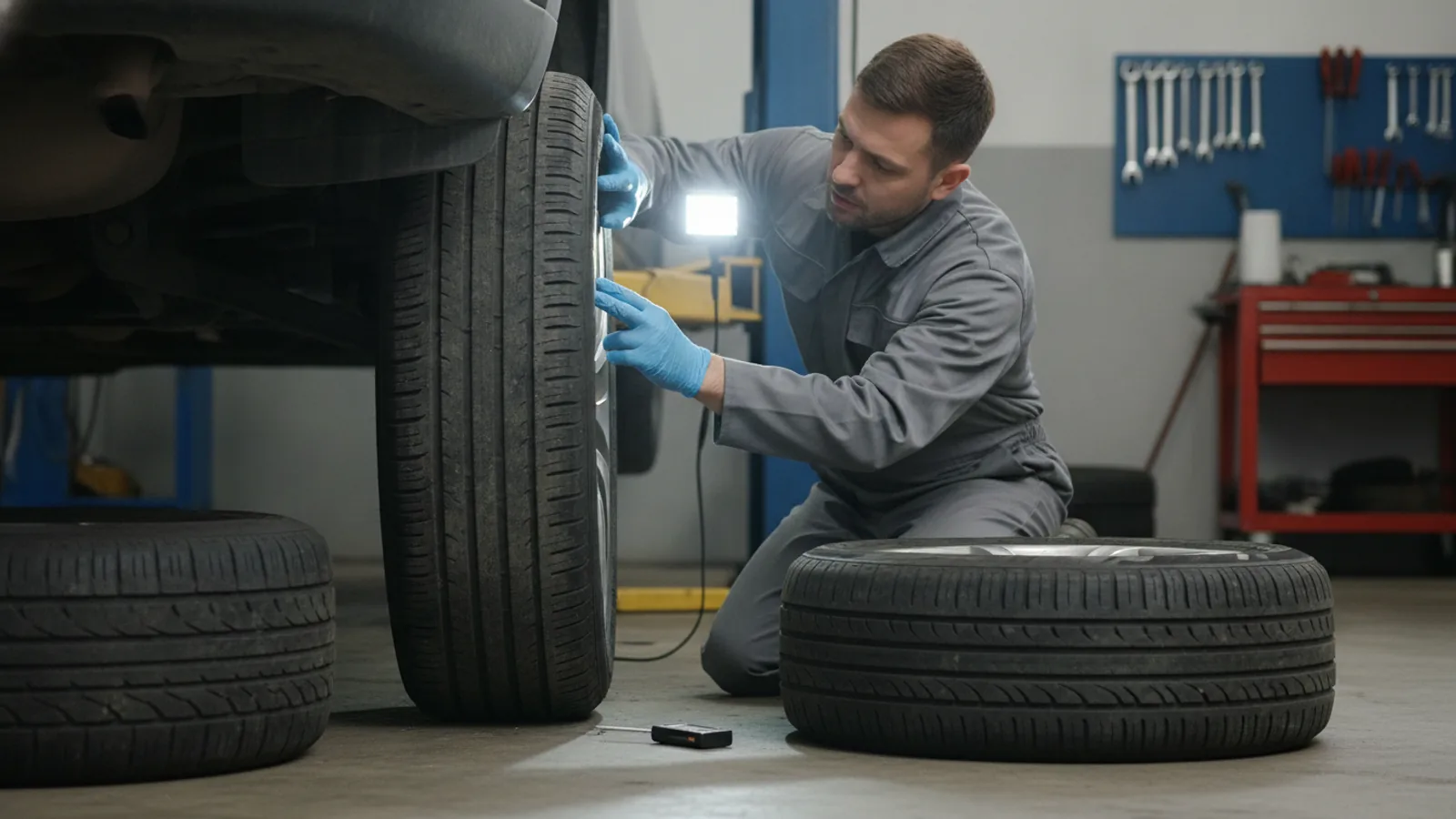
- Examine your old tyres for uneven wear, cracks, bulges, or embedded objects—these clues indicate alignment issues or damage that affect new tyre choice.
- Consider how many kilometres you drive each year and whether you mostly drive on wet, dry, or snowy city roads, so you can pick a tread pattern suited to those conditions.
Step-by-Step Instructions
Assess Your City Driving Needs
Begin by answering a few questions about your daily routine. Do you mostly drive on smooth asphalt, cobbled streets, or roads with potholes? Do you often carry passengers or heavy cargo like shopping or work equipment? How many kilometres do you cover in a typical week? City driving usually means frequent stop-and-go traffic, which accelerates tread wear, and lots of cornering, which stresses the sidewalls. If you often encounter rain, consider tyres with deep water-evacuation grooves and a high wet-grip rating, typically marked with an 'A' or 'B' on the EU label. For occasional snow, look for the three-peak mountain snowflake symbol, but if snow is rare, all-season tyres are often the best compromise. Your answers narrow down the tread compound, pattern, and reinforcement you need, so you don’t overspend on off-road capability or sacrifice comfort for race-track grip. Write down your priorities—safety, comfort, longevity, or fuel efficiency—and keep them in mind as you compare options.
Read the Tyre Sidewall Markings
Every tyre has a sequence of numbers and letters moulded into the sidewall, such as 195/65 R15 91H. The first number (195) is the width in millimetres. The second (65) is the aspect ratio—the height of the sidewall as a percentage of width. The 'R' means radial construction, and the following number (15) is the rim diameter in inches. After that, the load index (91) indicates how much weight the tyre can carry at maximum inflation (for 91, it’s 615 kg per tyre). The letter (H) is the speed rating, indicating the maximum safe speed—H means up to 210 km/h. For city driving, you need a load index at least equal to your car’s requirement, which you’ll find in the owner’s manual. The speed rating should be the same or higher than the original equipment. Using a lower rating can be dangerous and may invalidate your insurance. Also note the DOT code, which shows the week and year of manufacture; if the tyre is more than six years old, even if unused, consider replacing it. Double-check that the new tyre matches all these numbers before you buy.
Choose the Right Tyre Type for City Use
For everyday city driving, you typically choose between summer tyres, winter tyres, and all-season tyres. Summer tyres offer excellent dry and wet grip in warm weather but harden in cold conditions, reducing traction. Winter tyres use a softer rubber that stays flexible below 7°C, providing better grip on ice and snow, but they wear quickly on dry warm roads. All-season tyres are a middle ground—they perform adequately in mild winter conditions but are not ideal for extreme cold or hot weather. For a city car used year-round in a temperate climate, all-season tyres are often the most practical, as they eliminate the need for seasonal swaps. If you live in an area with harsh winters, dedicated winter tyres are safer from November to March. Also consider the tread pattern: symmetrical patterns are quiet and wear evenly, while directional patterns excel at dispersing water but must be mounted to rotate in one direction. Asymmetrical patterns combine different tread blocks for balanced performance. Your driving style matters too—if you often accelerate hard, choose a tyre with stiffer sidewalls for sharper response.
Verify Tyre Size and Fitment
Before purchasing, confirm that the new tyre fits your rim and wheel well. The size must match your car’s original specification, unless you are deliberately upsizing with specialist advice. Check the rim width range for the tyre—this is usually printed in the tyre’s data sheet or on the manufacturer’s website. For example, a 195/65 R15 tyre typically fits rims 6.0–7.5 inches wide. If the rim is too narrow, the tyre sidewall bulges, causing imprecise steering; if too wide, the bead may not seat correctly. Also verify the overall diameter and circumference stay within 3% of the original to avoid speedometer errors and traction-control issues. If you change the aspect ratio (like going to 205/60 R15), the width changes, which may affect clearance to suspension parts and wheel arches. Always test fit one wheel before mounting all four. Ask your fitter to balance each new tyre—unbalanced tyres cause vibrations at city speeds between 50 and 90 km/h. Finally, ensure the tyre’s load index equals or exceeds the maximum load written on your door placard.
Check Tread Depth and Wet Performance
In many regions, the legal minimum tread depth is 1.6 mm across the central three-quarters of the tread, but for city driving, safety experts recommend replacing tyres when tread depth reaches 3 mm. This is because wet braking performance drops significantly below 3 mm—the grooves can no longer channel water away quickly, leading to aquaplaning. To check your tread depth, insert a 20-pence coin (or a tread-depth gauge) into the main grooves; if the outer band is visible, your tread is too low. Also look for the tread wear indicators—raised bars moulded in the grooves at 1.6 mm. When these are level with the tread surface, the tyre is legally worn out. New tyres typically come with 8–9 mm of tread. In wet city roads, a tyre with a 'B' or 'A' wet grip rating on the EU label stops notably shorter than one with 'C'. Consider choosing tyres with the highest wet grip rating you can afford, even if they cost a bit more initially, because they reduce the risk of rear-end collisions in heavy traffic.
Decide on Load Rating and Speed Rating
Your car’s owner’s manual or the tyre placard lists the required load index and speed rating. The load index is a number from 60 to 125 that corresponds to a specific weight-capacity in kilograms. For example, index 91 means the tyre can support 615 kg at full inflation. For everyday city driving, the car rarely carries maximum load, but you must match at least the minimum index specified for your vehicle, because using a lower index can overheat and fail under heavy braking with a full car. The speed rating is a letter from A to Y, with 'Y' being the highest (over 300 km/h). City speeds rarely exceed 80 km/h, so a 'T' (up to 190 km/h) or 'H' (up to 210 km/h) is usually sufficient. If your car came with high-performance tyres rated 'V' (240 km/h), you can downsize to 'H' only if the manufacturer allows a lower speed rating for that model. Always check the placard; ignoring these ratings can affect your car’s handling in an emergency manoeuvre, and some insurers or legal authorities may view it as a modification.
Quick Reference
| Situation | Action | Why it helps |
|---|---|---|
| You notice your car pulls to one side while driving on a straight, flat city road. | Check the air pressure in all four tyres with a gauge, ensuring they match the figures on the driver's door placard. If pressures are correct, rotate the tyres front-to-back and observe if the pull follows the tyre; if it does, have that tyre inspected for a broken belt or internal damage. | Uneven inflation or internal damage in one tyre causes uneven rolling resistance, which makes the car drift. Identifying the source ensures you don't replace an otherwise good tyre, and it helps you address alignment issues before they ruin new tyres. |
| It's autumn and you plan to drive through the winter without changing tyres, but your current tyres have only 3 mm of tread. | Replace them with all-season tyres that carry the 'M+S' symbol and ideally the '3PMSF' (three-peak mountain snowflake) mark, if your winter climate includes occasional snow. Choose a tyre with a wet-grip label of 'A' or 'B' and set the correct pressure for colder temperatures (check manual for winter settings). | At 3 mm, wet braking is already compromised, and winter conditions worsen grip. All-season tyres with winter certification offer better cold-weather performance without the need for a second set, balancing safety and convenience for typical city winters. |
| You often carry heavy loads (like tools or luggage) in your city car, but you're considering a lighter, budget tyre to save money. | Always pick a tyre with a load index equal to or higher than the one printed on your door placard. For example, if the placard says 91, do not fit a tyre with load index 87. Also check the max load printed on the sidewall and ensure it covers the combined weight of your car and typical cargo. | Insufficient load capacity can lead to sidewall failure and a blowout, especially on rough city roads with sharp impacts. Matching the load rating prevents dangerous failures and maintains stable handling, even when your car is fully loaded. |
Common Issues
- Rapid and uneven wear on the inner or outer edges of the tread after only a few thousand kilometres.: Have a professional four-wheel alignment check performed, and also ask them to inspect the suspension bushes and wheel bearings. Correct the toe and camber angles to the manufacturer's specifications. Rotate your tyres every 8,000–10,000 km and re-balance them to promote even wear. If wear is only on one shoulder, the tyre may be over-inflated or under-inflated—adjust pressure accordingly.
- Persistent vibrations through the steering wheel when driving at city speeds (around 60–80 km/h).: First, check for bulges, flat spots, or embedded objects in the tread. Then have the tyres balanced on a machine that spins the wheel and tyre assembly. If vibrations persist, ask for a road-force balance, which measures uniformity, and check that the rim is not bent. If the car vibrates only when braking, the brake discs may be warped, separate issue from tyres.
- Increased road noise in the cabin, making city driving uncomfortable.: Inspect the tread for feathering or sawtooth wear patterns, which indicate misalignment. Rotate tyres as per interval and check if noise reduces. If not, consider switching to a tyre model that has a quieter tread pitch sequence—often marketed as 'low-noise' tyres. Ensure tyre pressure is correct; over-inflation increases noise on rough surfaces. As a last resort, have a sound-deadening material installed in wheel wells.
Advanced Tips
- When comparing tyres, look at the 'rolling resistance' label—tyres with an 'A' rating can significantly improve fuel economy, but they may have slightly harder rubber, so weigh the trade-off with wet grip.
- If you live in a city with many tram tracks or smooth concrete roads, consider tyres with smaller tread blocks and continuous centre ribs—these reduce the humming noise and improve steering stability on those surfaces.
- Keep a tyre repair kit in your boot that includes plugs and a compressor, but remember that a plugged tyre is a temporary repair; have it professionally vulcanized or replaced within a few days to maintain safety.
Final Checklist
- Verify that every new tyre matches the size, load index, and speed rating listed on your car's door placard or owner's manual.
- Confirm the tread depth of your new tyres is at least 7 mm, and check the sidewall for the manufacturing date (DOT code) to ensure it's less than three years old.
- Ensure all four tyres are of the same brand, model, and tread pattern; mixing different tyres on an axle is never recommended.
- After fitting, check tyre pressures at least once a month and before long trips, adjusting to the manufacturer's recommended cold pressure, and visually inspect for any damage.
FAQ
What is the difference between all-season and touring tyres for city driving?
All-season tyres are designed to perform in a range of conditions, including light snow and warmer dry roads, with a tread compound that doesn't harden excessively in cold weather. Touring tyres are a subcategory of summer tyres, focusing on comfort, low noise, and long tread life on highways, but they are not suitable for snow and may have poorer cold-weather grip. For everyday city driving in moderate climates, all-season tyres are often the better choice because they offer adequate performance throughout the year without seasonal changeovers, whereas touring tyres are best if you only drive on dry or wet roads and never encounter freezing temperatures.
How do I know if I need new tyres even if the tread depth is above the legal limit?
Even if your tread depth is above the 1.6 mm legal minimum, you should consider replacing tyres if you notice any sidewall cracks, bulges, or cuts, or if the rubber feels hard and brittle (which reduces grip). Also, if the tyres are more than six years old, regardless of tread, the rubber degrades and loses elasticity. Additionally, if you experience poor traction in the wet (such as the car struggling to stop or sliding), or if the car's handling has become vague, it's wise to replace them. For city driving, where quick braking is essential, many experts recommend replacing at 3 mm for optimal safety.
Can I fit a slightly wider tyre on my car to improve grip and looks?
Wider tyres can increase grip and cornering stability, but they may also affect speedometer accuracy, fuel economy, and clearance with the wheel arches. If you increase the width while keeping the same rim, the sidewall height changes, which can upset the suspension geometry. To change width safely, you must maintain the overall diameter within about 3% of the original, and you should consult a professional. Also, ensure the new tyre's load and speed ratings are adequate. If in doubt, stick to the original size, as it's the product of extensive testing by your car manufacturer for safety and performance.