How To Choose Choosing A Portable Tyre Inflator For Home Use
A practical step-by-step guide to how to choose choosing a portable tyre inflator for home use, including preparation, instructions, common issues, tips, and next steps.
How To Choose Choosing A Portable Tyre Inflator For Home Use
This guide explains how to choose a portable tyre inflator for home use, focusing on key specifications, practical features, and safety considerations. It helps you assess your needs, understand power options, and select a device that is reliable and easy to use for maintaining correct tyre pressure, which improves safety and fuel efficiency. The guide offers step-by-step advice from initial planning to final purchase, including how to test and use the inflator properly. It also covers common problems and troubleshooting to ensure you make an informed decision that matches your vehicle and usage patterns, avoiding common mistakes and ensuring long-term satisfaction.
Fast Answer
- Determine the power source: choose a 12V inflator that plugs into your car's cigarette lighter for basic home use, or a cordless rechargeable model for convenience and portability without needing a power outlet.
- Check the maximum pressure rating: ensure the inflator can reach at least 100 PSI (pounds per square inch) to handle car tyres, and also consider the airflow rate (litres per minute) for faster inflation, especially if you have larger tyres.
Before You Start
- Check your vehicle's tyre pressure specifications: find the recommended PSI in the owner's manual or on the sticker inside the driver's door frame, as this will determine the minimum pressure rating you need for the inflator.
- Measure the distance from your car's power outlet (cigarette lighter) to each tyre to estimate how long the power cord and air hose should be for comfortable reach without stretching.
- Consider the types of vehicles you own (car, SUV, motorcycle, bicycle) and their typical tyre pressure ranges, as this affects the maximum pressure and airflow requirements.
- Decide whether you prefer a digital or analog pressure gauge, and whether you want features like auto shut-off, LED light, or a built-in flashlight, which can enhance usability during night-time emergencies.
Step-by-Step Instructions
Assess Your Inflation Needs
First, list all types of tyres you will need to inflate at home. This includes not only your car's tyres but also those of any other vehicles like a motorcycle, bicycle, or trailer. For each vehicle, note the recommended tyre pressure, which you can find in the owner's manual or on a placard typically located on the driver's side door jamb, glovebox, or fuel filler flap. Also consider the frequency of use. If you only need to top up occasionally, a simpler inflator may suffice, but if you frequently check and adjust pressures, a more robust model with a higher duty cycle would be practical. Write down the maximum PSI you will need—most passenger cars require 30-35 PSI, but larger SUVs or trucks may need up to 50 PSI. This assessment directly influences the inflator's power and pressure rating you should look for, ensuring it can handle all your tyres without struggling or shutting down prematurely.
Select the Power Source
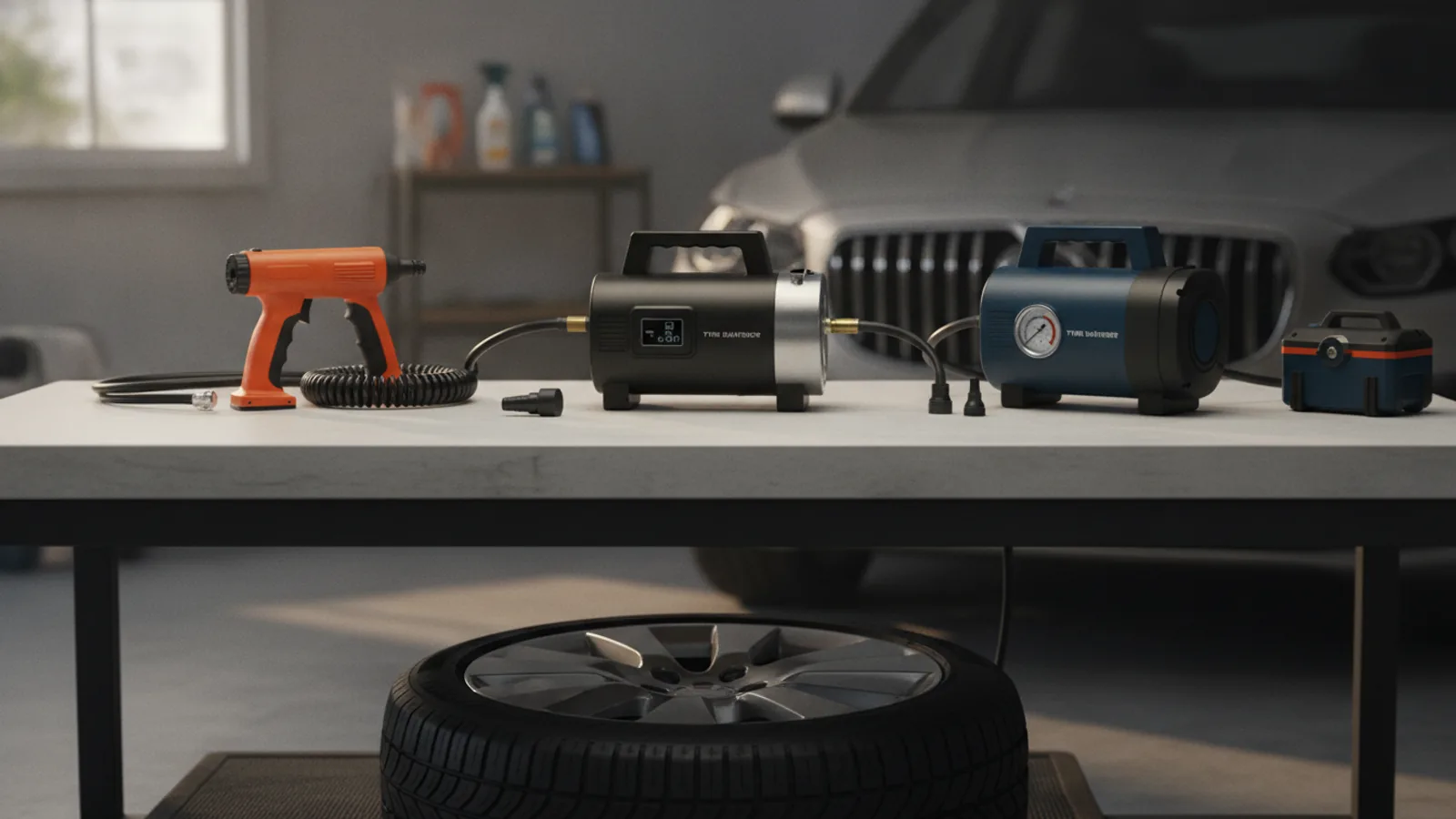
Decide between a 12V inflator that plugs into your vehicle's cigarette lighter socket, a rechargeable cordless model, or one that runs on household AC power. For most home use, a 12V inflator is common because it is powered directly from the car's battery and can be conveniently used roadside. However, be aware of the amperage rating of your car's socket; many are fused at 10-15 amps, and a high-powered inflator may draw excessive current, blowing a fuse. Cordless inflators with a built-in lithium-ion battery offer portability and can be used anywhere without a cord, but they need regular recharging and may have lower maximum pressure. AC-powered inflators are ideal if you always have a wall outlet nearby, e.g., in a garage, but they are less flexible. Consider the trade-offs in terms of power availability, convenience, and whether the inflator's power source matches your typical usage scenario.
Check Pressure and Flow Ratings
Examine the inflator's specifications, focusing on two key numbers: maximum pressure (in PSI) and airflow rate (usually in litres per minute or CFM). The maximum pressure must exceed the highest required pressure of your tyres by at least 20% as a buffer. For example, if your car tyres need 35 PSI, an inflator rated at 100 PSI gives plenty of headroom. The airflow rate determines how quickly the tyre inflates; higher flow reduces wait time. For a standard car tyre, an inflator with a flow rate of around 35 litres per minute can fill from 28 to 32 PSI in about 2-3 minutes, while a lower rate will take longer. If you have larger tyres, such as on a truck or SUV, choose a higher flow rate (e.g., 50+ L/min) to avoid excessive waiting. Always check the product specification sheet or manual for these numbers, as they are critical for effective performance.
Evaluate Gauge Accuracy and Features
The pressure gauge on the inflator is crucial for accurate inflation. Analog gauges can be less precise and may be hard to read in low light. Digital gauges display pressure clearly and often offer features like auto shut-off, which stops the inflator when the desired pressure is reached, preventing over-inflation. Look for a digital gauge that is backlit and has a resolution of at least 0.5 PSI. Additionally, consider the length of the power cord and air hose; a total reach of at least 10-12 feet ensures you can reach all four tyres without moving the car. Some models include a built-in LED flashlight, which is useful for emergencies at night, and a compact storage case. These features enhance convenience but also add to the cost. Prioritize accuracy and auto shut-off for safe, reliable use.
Build Quality and Safety Considerations
Inspect the build quality of the inflator, including the material of the housing (preferably high-impact plastic or metal), the quality of the hose and fittings, and the overall durability. A sturdy unit will withstand bumps in your boot and frequent use. Look for rubberized feet to reduce vibration and a handle for easy carrying. Check the power cord and plug for proper insulation and a secure fit into the socket. Safety features are also important: an automatic shut-off to prevent overheating, thermal protection that stops the motor if it gets too hot, and a fuse or circuit breaker in the plug to protect against overload. Ensure the inflator has passed relevant safety certifications, such as CE or UL, but remember that certification standards may vary by region, so check for markings that indicate compliance with your local safety regulations.
Test Before Purchase
If possible, test the inflator before buying. Many retailers have display models, but you can also purchase online with a return policy. When testing, plug it into your car's 12V socket and inflate a known-dry tyre that is slightly low on pressure, such as a bicycle tyre. Monitor how quickly it inflates, how loud it is, and whether it stops at the desired pressure if it has auto shut-off. Check the pressure reading against a separate gauge to ensure accuracy. Also, feel the air hose to ensure it remains cool during operation. Testing allows you to verify that the inflator meets your expectations and works with your vehicle's auxiliary power socket. If the retailer does not allow testing, rely on customer reviews, but be cautious of biased or paid reviews; look for verified purchases and detailed feedback.
Quick Reference
| Situation | Action | Why it helps |
|---|---|---|
| You need to inflate car tyres at home and have access to a wall cigarette lighter socket in your vehicle. | Choose a 12V inflator with a maximum pressure rating of at least 100 PSI, a flow rate of 35 L/min or higher, and a 10-foot hose. Plug it into the cigarette lighter and connect the air chuck to the valve, then set the desired pressure on the digital gauge and let it run until it auto-shuts off. | This setup matches the power source available, clears the pressure requirement for car tyres, and the auto shut-off prevents over-inflation, saving time and ensuring correct pressure. |
| You often need to adjust tyre pressure without a nearby power outlet, such as on a driveway or in a parking lot. | Select a cordless rechargeable inflator with a built-in pressure gauge and a backup manual needle. Charge the battery fully before output, then use the inflator's built-in display to inflate tyres, monitoring the gauge closely and turning it off when the desired pressure is reached. | A cordless inflator provides portability and flexibility, especially when there is no outlet nearby, but it requires monitoring because it may lack auto shut-off, and the battery ensures you are not tethered to a car or wall socket. |
| You need to inflate multiple tyres (e.g., all four car tyres) and want to avoid engine running or battery drain. | Use a 12V inflator with an additional battery pack or a model that can be powered by a separate 12V battery, or use a cordless inflator with a high-capacity battery. Start with the engine off, inflate all four tyres, but take breaks between tyres to allow the inflator to cool, and check the battery voltage to ensure it does not drop below the level needed to start the car. | Inflating multiple tyres can draw significant current; without precautions, you risk draining the car battery, especially if the engine is off. Using a cordless model or taking breaks helps manage power consumption and prevents overheating. |
Common Issues
- The inflator stops working mid-way through inflating a tyre.: If the inflator keeps blowing the power socket fuse, it may be drawing too much current. Use a higher-rated fuse or a dedicated circuit, but first check the inflator's amperage rating to ensure it matches the vehicle's socket rating. Also, verify the plug's internal connection and use a shorter extension cord if needed.
- The pressure gauge reads inaccurately, showing a different value than a separate gauge.: Also, ensure the air hose is tightly connected to the valve and there are no leaks. A poor connection can cause pressure to drop when reading, resulting in an inaccurate reading.
- The inflator overheats and shuts down after a short time.: Consider the ambient temperature; hot environments cause the motor to heat faster. If you regularly need to inflate several tyres, invest in a model with a higher duty cycle or a built-in thermal cut-off reset button.
Advanced Tips
- Use a tyre pressure gauge with a bleeder valve on the inflator to slightly release air if you over-inflate, ensuring you stay at the exact recommended pressure.
- For cold tyre pressure, inflate to 2-3 PSI above the recommended value, because as tyres heat up during driving, pressure will rise; this ensures optimal setting when cold.
- Keep a spare air chuck and hose repair kit in your vehicle, as these are common wear items that can fail at the worst time.
Final Checklist
- Verify the inflator's maximum pressure is 100 PSI or higher, suitable for your car tyres.
- Check that the airflow rate is at least 30 L/min to ensure reasonably quick inflation.
- Choose a model with a digital gauge that shows pressure in increments of 1 PSI or less for accuracy.
- Confirm the power cord and air hose are long enough to reach all tyres, typically at least 3 meters (10 feet) each.
FAQ
How do I know what PSI to set for my car tyres?
Find the recommended PSI on the driver's side door placard, inside the fuel filler flap, or in the owner's manual. The value is usually for cold tyres, so check and adjust before driving or at least after the car has been idle for a few hours. Never exceed the maximum pressure printed on the tyre sidewall, as that is a safety limit, not a recommended setting.
Can I use a portable inflator to inflate other items like sports balls or air mattresses?
Yes, many portable inflators come with additional nozzles or adapters for such items. However, the high pressure and high airflow of a tyre inflator may over-inflate these items quickly, causing damage. Use the inflator with caution, and set the target pressure low and check frequently. Some inflators offer a low-pressure setting precisely for this purpose.
How long does it take to inflate a car tyre from flat?
Time depends on the tyre size and the inflator's airflow rate. For a typical 16-inch car tyre, a 35 L/min inflator can take around 5-7 minutes to go from completely flat to 30 PSI. Larger tyres will take longer. Always monitor the pressure and stop at the recommended level, and be aware that inflating from zero pressure is the most demanding for the device, so allow it to cool after such a task.