Choosing A Portable Tyre Inflator For Home Use Checklist For First Time Readers
A practical step-by-step guide to choosing a portable tyre inflator for home use checklist for first-time readers, including preparation, instructions, common issues, tips, and next steps.
Choosing A Portable Tyre Inflator For Home Use Checklist For First Time Readers
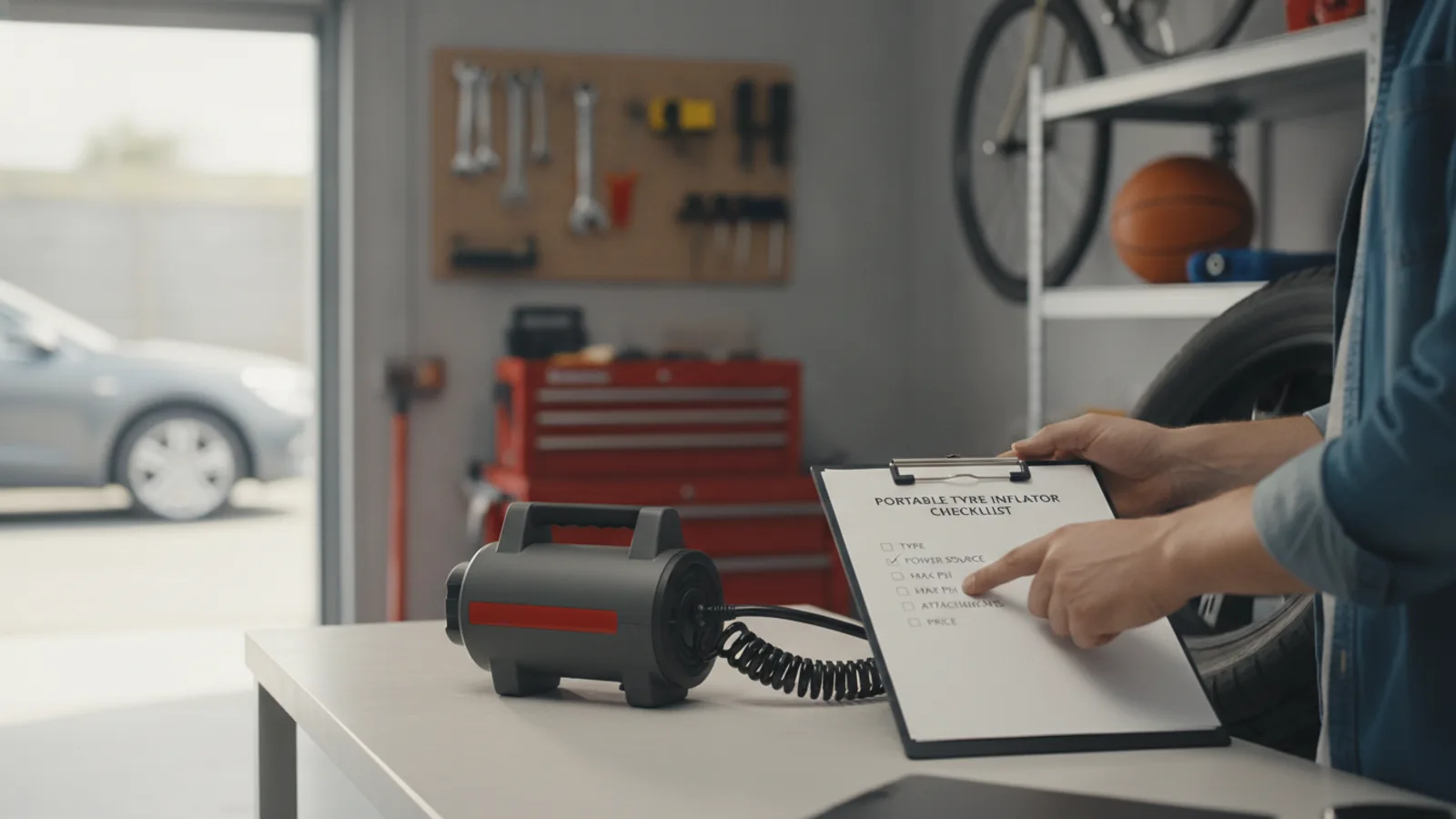
A portable tyre inflator is a compact air compressor that plugs into your car's power socket or a built-in battery, letting you top up tyres at home or on the road. This guide helps first-time buyers choose one that is easy to use, reliable, and suited to everyday car maintenance. You will learn what to look for in power, pressure control, and build quality, and how to avoid common mistakes. By the end, you will have a clear checklist to compare options confidently and keep your tyres at the correct pressure for safer driving and better fuel efficiency. The focus is on practical, home-friendly features, not professional workshop tools.
Fast Answer
- Choose a 12V inflator with a built-in pressure gauge and automatic shut-off at your target PSI; this avoids over-inflation and makes the task simple.
- Look for a unit with a bright digital display and a long (3 metre) air hose so you can reach all four tyres without moving the car.
Before You Start
- Check your car's recommended tyre pressure (in PSI or BAR) from the sticker on the driver's door frame or the owner's manual—this is your target number.
- Decide whether you want a corded model (plugs into the 12V socket) or a cordless battery-powered one; corded is lighter but cordless is more portable.
- Measure the space in your car boot or garage to confirm the inflator's size and case fit comfortably; a compact unit is easier to store.
- Think about how often you'll use it: for occasional top-ups, a basic unit is enough; for frequent use, choose a more durable motor.
Step-by-Step Instructions
Identify Your Tyre Pressure Needs
First, find the exact recommended tyre pressure for your vehicle. This number is usually printed on a sticker inside the driver's door frame, in the glovebox, or in the owner's manual. It is typically shown in PSI (pounds per square inch) or BAR. Note that front and rear tyres might have different recommended pressures, especially if you often carry heavy loads. Write down both figures—you'll need them when you set the inflator. Why does this matter? Inflating to the wrong pressure can ruin handling, lower fuel economy, and increase the risk of a blowout. Using the car maker's number, not what you think looks right, ensures you are safe and efficient. If the sticker is missing, check the manual or contact the manufacturer's customer support with your vehicle identification number to confirm the correct values.
Pick a Reliable Power Source
Decide between a 12V corded inflator that plugs into your car's cigarette lighter or accessory socket, and a cordless model with a built-in rechargeable battery. For home use, a corded unit is simpler and often more powerful because it draws directly from the car battery. However, ensure the cable is long enough to reach all tyres without stretching—about three metres is ideal. A cordless inflator is convenient if you need to inflate tyres away from a vehicle, but it needs regular charging and may have lower maximum pressure. Check your car's 12V socket rating in the manual to make sure it can handle the inflator's amp draw; most are fine, but older cars might have a fuse that trips. Choose a type that matches your daily routine and storage plan.
Check the Pressure Gauge Accuracy
The pressure gauge is the most important feature for home use. A digital gauge on a clear display is easier to read than an analogue dial, especially in low light or when you are crouching. Look for an inflator with an accuracy of plus or minus one PSI, as stated in the product specifications. Before you trust the built-in gauge, test it against a known-accurate gauge (like a quality standalone digital tyre gauge) by inflating a spare tyre to a set pressure and comparing readings. Why does this check matter? If the built-in gauge reads low, you will over-inflate and risk tyre damage; if it reads high, you will under-inflate and reduce fuel efficiency. An automatic shut-off mechanism that stops at the set pressure adds peace of mind, but do not rely solely on it until you verify its calibration.
Assess the Air Hose and Nozzle Quality
A longer, flexible air hose makes it easier to reach all four tyres without repositioning the car or the inflator. Look for a hose length of at least two metres—preferably three—and a connector that locks securely onto the tyre valve. Brass or metal fittings are more durable than plastic ones. Check the hose's flexibility in cold weather; a stiff hose can be hard to manage. The nozzle should come with a threaded adapter that fits both Schrader (ordinary car) and Presta (bicycle) valves if you plan to use it on other items. Practice connecting and disconnecting the hose a few times to ensure it is simple and does not leak air. A good seal is crucial because even a small leak makes the inflator run longer and gives inaccurate readings.
Evaluate Portability and Storage
Think about where you will store the inflator and how you will carry it. A compact unit that fits in a small carry case or has a built-in handle is easier to keep in the car boot or a garage shelf. Check the dimensions and weight in the product description—typical models weigh between one and two kilogrammes. A unit with a cord storage wrap and a tidy hose attachment is more likely to stay organised. If you often travel or attend events, portability becomes even more important because you might need to carry the inflator to another vehicle. Also, consider the noise level; the specifications often list dB, and a quieter model (under 80 dB) is more pleasant for home use.
Look for Safety and Maintenance Features
Choose an inflator with built-in safety features such as automatic shut-off to prevent over-inflation, a thermal overload protection that stops the motor if it gets too hot, and a fuse in the power cord for protection. Check that the inflation pressure range covers your needs—most home models handle up to 150 PSI, which is more than enough for car, motorcycle, and bicycle tyres. Read the user manual and note the recommended duty cycle, which tells you how long the motor can run continuously before needing a cool-down. For example, many inflators require a five-minute rest after ten minutes of use. Following this guide prevents overheating and extends the motor's life. Also, ensure the power cord is thick and well-insulated, and that the air filter (if any) is accessible for cleaning.
Quick Reference
| Situation | Action | Why it helps |
|---|---|---|
| You are at home in the evening and need to inflate a tyre before tomorrow's commute. | Plug the 12V inflator into your car's socket, set the target pressure to the recommended PSI, attach the hose to the valve, and let it run until it shuts off automatically; verify with a gauge. | This ensures a correct, hands-free inflation without the need to visit a petrol station, saving you time and keeping you safe on the road. |
| The tyre looks low but you do not know the exact recommended pressure. | Open the driver's door and read the pressure sticker on the door frame; note the number for the axle that has the low tyre, then inflate to that value. | Using the manufacturer's number prevents over- or under-inflation, which can cause poor handling, increased wear, and even blowouts. |
| Your inflator's gauge gives a different reading than your standalone gauge. | Use a separate, accurate tyre pressure gauge to check the pressure immediately after your inflator stops; adjust the target setting on the inflator up or down to compensate for the difference. | This calibration ensures your tyres are actually at the correct pressure, because relying on a faulty built-in gauge can lead to dangerous tyres. |
Common Issues
- Inflator runs slowly or stops after a short time.: Check the 12V socket and fuse in your car; the socket may not provide enough power if the engine is off, so run the inflator with the engine running to avoid draining the battery and to give a stable voltage output.
- Air leaking from the connection between the hose and the tyre valve.: Press the connector down firmly until you hear a click or feel a tight fit; if it still leaks, try a different adapter or check for debris on the valve. Slightly twisting the connector while pressing can create a better seal.
- Inflator becomes hot to the touch during use.: Stop immediately and allow the inflator to cool for at least 15 minutes. This is a sign of overuse; if you need to inflate multiple tyres, do one tyre at a time with a break in between, and refer to the duty cycle in the manual.
Advanced Tips
- Use a digital tyre pressure gauge (separate) to check each tyre after inflation, as built-in gauges can drift; compare readings and note any deviation for future reference.
- To prolong battery life in a cordless inflator, avoid leaving it fully discharged; store it at around 50% charge and recharge it every three months if not used.
- For more accurate inflation in cold weather, inflate to the recommended cold pressure, and do not drive the car before checking, because heat from driving raises pressure readings.
Final Checklist
- Confirm that the inflator you choose has an accurate digital gauge and automatic shut-off to prevent over-inflation.
- Verify the air hose length is at least two metres and the unit fits comfortably in your car boot or garage storage.
- Check the inflator's power source matches your habit—choose corded for simplicity or cordless for portability, and test it before relying on it.
- Inspect the build quality and look for a fuse and thermal overload protection to ensure safe, long-lasting operation.
FAQ
Can I use a portable tyre inflator on a daily basis?
Yes, you can use it daily, but be aware of the duty cycle. Most inflators are designed for intermittent use—for example, run for 10 minutes, then cool for 10 minutes. If you need to inflate multiple tyres, do them one at a time and allow the unit to rest between uses. Frequent daily use may also wear out the battery faster on cordless models, so a corded unit is usually more reliable for regular home maintenance.
What is the difference between PSI and BAR, and which should I use?
PSI (pounds per square inch) and BAR are both units for air pressure. Most car manuals in English-speaking countries use PSI, but some vehicles or manufacturers use BAR. To convert, note that 1 BAR equals roughly 14.5 PSI. Check your owner's manual to see which unit your vehicle specifies, and make sure your inflator can display that unit. Using the correct unit prevents you from setting the wrong pressure.
How do I know if the built-in gauge is accurate?
You can test it by comparing it with a separate, quality tyre pressure gauge. First, inflate a tyre until the inflator reads a certain value, then immediately check with the separate gauge. If there is a difference, adjust your target pressure accordingly. You can do this once after buying the inflator, and then periodically, as gauges can drift over time.