What To Check Before Choosing A Portable Tyre Inflator For Home Use
A practical step-by-step guide to what to check before choosing a portable tyre inflator for home use, including preparation, instructions, common issues, tips, and next steps.
What To Check Before Choosing A Portable Tyre Inflator For Home Use
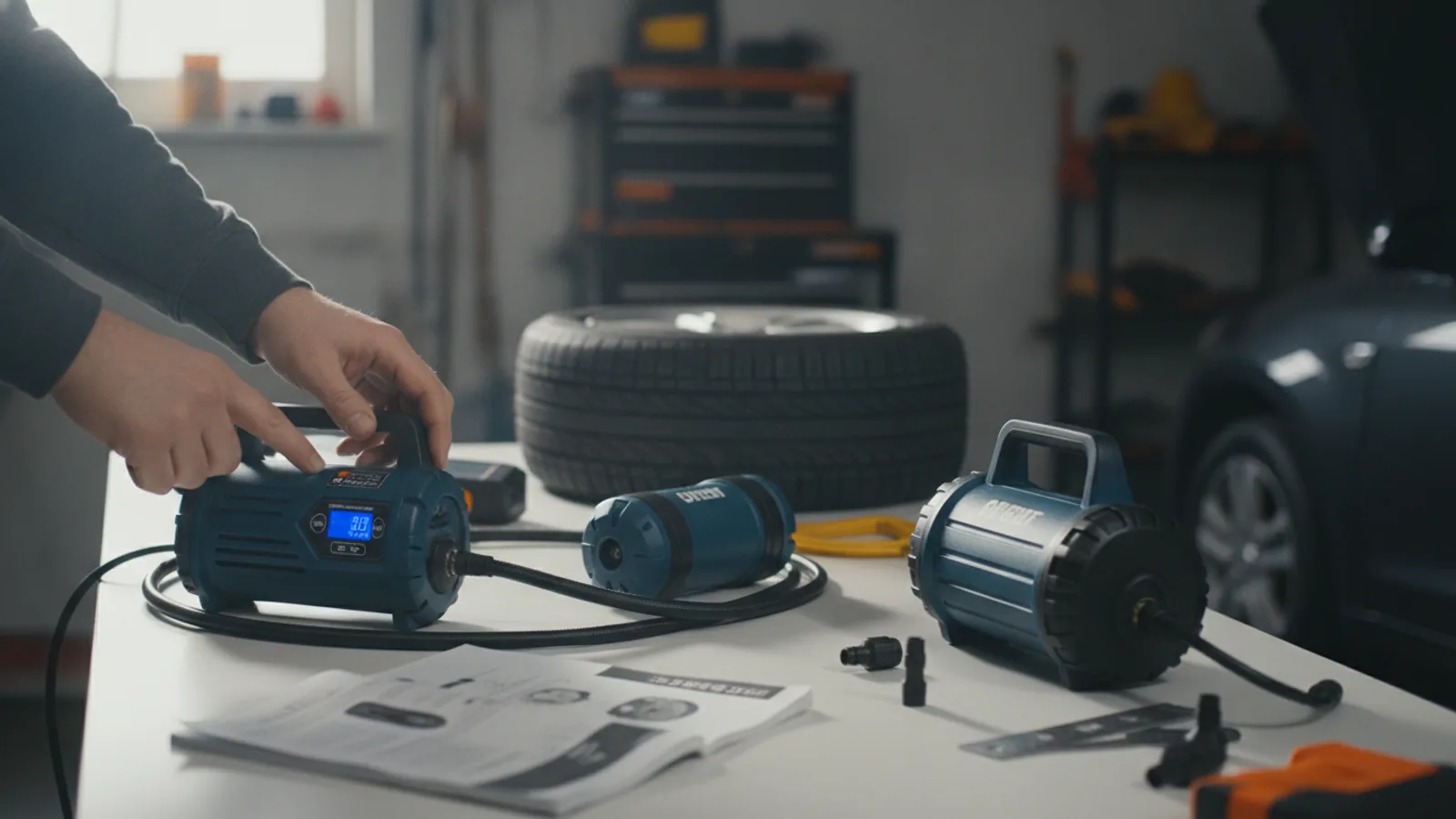
Choosing a portable tyre inflator for home use involves more than picking the first model you see. You need to consider power source, pressure range, built-in safety features, ease of use, and how well it suits the vehicles you own. This guide walks you through the essential checks before you buy, so you end up with a reliable tool that serves you for years without frustration.
Fast Answer
- Check the pressure range and accuracy to ensure it covers your vehicle's required PSI and reads reliably.
- Verify the power source (12V, battery, or mains) and that it matches where you will use it most, like home garage or roadside.
Before You Start
- Find the recommended tyre pressure for your car, usually on a sticker inside the driver's door frame or in the owner's manual.
- Measure your tyre valve stem length and angle to check if a compact inflator head will fit comfortably.
- List the types of vehicles you own (car, bike, SUV, trailer) because each may need different pressure ranges and adapters.
- Decide whether you need a unit that works only at home or one that can also run from a car's 12V outlet for roadside emergencies.
Step-by-Step Instructions
Check the Pressure Range and Accuracy
Start by looking at the inflator's stated pressure range, usually given in PSI (pounds per square inch) or BAR. Your car's recommended tyre pressure is typically between 30 and 35 PSI for a passenger car, but check your vehicle's sticker or manual. The unit must be able to deliver at least that pressure, and ideally have a margin above it, say up to 60 PSI, to handle a spare tyre or a bike. Accuracy matters just as much. A gauge that reads incorrectly by 2 or 3 PSI can leave your tyres over- or under-inflated, hurting fuel economy and tyre wear. Look for a digital gauge, which is often more precise than an analogue one. Also note the minimum pressure it can read; some cheap units cannot read below 5 PSI, which is useless for a flat tyre. Once you know the range, compare it to the requirements of every vehicle and item you plan to inflate, such as a bicycle tyre that may need 40 to 65 PSI. By doing this check first, you eliminate many unsuitable models early.
Evaluate Power Source and Cable Length
Portable inflators typically run on 12V DC from a car's cigarette lighter socket, a built-in rechargeable battery, or mains AC power. Decide which one suits your home use. If you mainly inflate tyres at home, a mains-powered unit is convenient because you do not need to idle your car or worry about the battery. If you want portability for emergencies, a 12V unit that plugs into your car's accessory outlet is a standard choice, but check that the cable is long enough to reach all four tyres comfortably. A 3-metre cable is often enough, but longer is better if you have a large SUV or van. For rechargeable units, look at how long the battery lasts and how long it takes to recharge; a typical duty cycle is 20 to 30 minutes, enough for a few tyres on a single charge. Also verify the type of power connector: some newer vehicles have a different-shaped socket, so you may need an adapter. If you plan to use the inflator in a garage without a nearby socket, a rechargeable unit gives you flexibility. Always plug into a socket that is clean, and avoid using an extension cord that is too thin for mains units, as it can overheat. Checking the power source and cable length before you buy ensures you can actually inflate your tyres without frustration.
Inspect the Build Quality and Hose Type
Take a close look at the inflator's body and hose. The housing should be made of sturdy plastic or metal, not flimsy, because it must withstand being dropped in a boot or garage. Check the hose: a braided rubber hose is more flexible and durable than a thin PVC one, which can crack in cold weather. The length of the hose is also important—longer hoses mean you can reach the valve without contorting, but they can also be more cumbersome to store. Look for a connection that is a screw-on type or a quick-release clip; a clip is easier to use one-handed, but a screw-on gives a more secure seal. Examine the inflator head: it should fit both Presta and Schrader valves if you own a bike, and it should have a locking mechanism to avoid air leaks. Also, check that the on/off switch is easy to reach and operate, and that the digital display is clear and backlit if you might use it at dusk. The overall weight matters if you will carry it around; a heavy unit is more of a chore. By inspecting the build quality and hose, you ensure the inflator will last and be pleasant to use.
Look for Safety and Overheat Protection
A tyre inflator is a small compressor, and like any electric device, it can overheat if used for too long. Check whether the unit has a built-in thermal overload protector that automatically shuts it off if it gets too hot. This is a critical safety feature because it prevents damage to the motor and reduces the risk of fire. Also look for a pressure gauge that is easy to read and a shut-off function if you set a target pressure; some digital units let you set the desired PSI and they stop automatically. That prevents overinflation, which is a common cause of tyre failure. Examine the power cord for a fuse or a properly rated plug, and see if the unit has a carry case to protect it. Also verify that the inflator is rated for continuous operation; many budget models state a duty cycle of 10 minutes on, 15 minutes off, which means you might have to wait if inflating a large tyre. By choosing a model with overheat protection and an automatic shut-off, you make the process safer and more convenient, especially if you are not paying full attention while waiting.
Test the Noise Level and Speed
Compressors are notoriously noisy, but some are quieter than others. Loudness is measured in decibels, and a typical 12V inflator produces around 90 to 100 dB, which is about as loud as a lawnmower. If you will use it in a shared garage or late at night, choose a model that advertises a lower noise level, perhaps under 85 dB. You cannot fully test this in a store, but you can look at user reviews for subjective noise comments. Inflating speed matters too: a unit that fills a typical car tyre from flat to 30 PSI in under 3 minutes is decent; slower units can feel tedious, especially if you have multiple tyres. To compare, look at the airflow rate in litres per minute (L/min) or CFM (cubic feet per minute). A higher airflow generally means faster inflation. However, note that faster inflators are often noisier and larger. Think about your tolerance for noise and your patience. If you have motorbikes with small tyres, speed is less critical. But for a large SUV tyre, a slow unit might take 10 minutes or more. By checking noise and speed, you set realistic expectations and avoid buying a tool that is unpleasant to use.
Verify Included Accessories and Adapters
Last, check what comes in the box. Most portable inflators include a few adapters for different valves, such as a needle adapter for sports balls, a cone for inflatable toys, and maybe a Presta valve adapter for bicycles. Make sure the kit includes the specific adapters you need for your own items. If you have a swimming ring, a football, a bike, or a trailer tyre, you will want the right nozzle. Also see if the inflator comes with a storage case or bag, which keeps everything together and prevents losing small parts. A built-in light is a bonus if you might use it in the dark. Some models include a separate hose for accessories, while others have a removable hose that does double duty. Check how the accessories attach: they should be a push-fit or quick-connect, not requiring tools. A set with a limited selection might save you a few pence but could cost you later if you need to buy adapters separately. By verifying the included accessories and adapters, you ensure the inflator is versatile enough for all your home inflation jobs and that you do not have to hunt for extra parts when you need them.
Quick Reference
| Situation | Action | Why it helps |
|---|---|---|
| You own a large SUV and typically inflate its tyres from a garage socket. | Choose an inflator with a mains power cord of at least 5 metres and a pressure range up to 80 PSI. | A long cord reaches all four wheels without needing an extension, and the higher range covers the heavier vehicle's requirements. |
| You ride a bicycle with Presta valves and also want to inflate car tyres. | Pick an inflator that includes a Presta adapter or has a head that handles both valve types, and check for a gauge accurate down to 1 PSI increments. | Bicycle tyres need a different valve and a more sensitive pressure setting, so the inflator must be tailored to that use. |
| You plan to use the inflator mainly at home but occasionally need it on the road. | Select a rechargeable battery model with a USB-C port for recharging and a car-charging cable, and confirm it can fully inflate a tyre from flat on one charge. | Rechargeable models offer portability, but you need a power backup and enough battery capacity to handle an emergency. |
Common Issues
- The inflator's gauge reads higher than the actual pressure, leading to underinflated tyres.: Buy a separate reliable digital tyre pressure gauge and compare it to the inflator's reading; if there is a discrepancy, use the separate gauge to set the target pressure, or adjust the inflator's calibration if possible.
- The inflator stops suddenly during inflation, possibly due to overheating.: Allow the unit to cool down for at least 15 minutes, then resume, but if it happens frequently, check that you are not exceeding the duty cycle; consider purchasing a model with automatic shut-off or a higher-duty motor.
- The inflator cannot reach the valve because the hose is too short.: Measure the distance from the power socket to each tyre position before buying; if you already own the inflator, use an extension cord (for mains models) or a 12V extension if safe, but note that long extensions can cause voltage drops.
Advanced Tips
- Carry a portable digital pressure gauge in your car at all times so you can verify the inflator's reading and also check pressures when the inflator is not around.
- Check the inflator's internal filter and clean it occasionally to maintain airflow and prevent dust from damaging the motor.
- When storing the inflator, let it cool completely before packing, and keep it in a dry place to avoid moisture affecting electrical parts.
Final Checklist
- Pressure range covers at least 0-60 PSI and is accurate with a digital gauge.
- Power source is compatible with your home outlets and car, with a sufficient cable length.
- Overheat protection and an automatic shut-off at a set pressure are present.
- All necessary adapters for your vehicles and inflatables are included and fit securely.
FAQ
How often should I replace my portable tyre inflator?
A good portable tyre inflator can last several years, but it depends on how often you use it. If you notice that it takes significantly longer to inflate a tyre, reads pressures inaccurately, or starts emitting unusual smells, it is time to replace it. Usually, a unit with a metal or high-quality plastic body and a braided hose will last longer. Check the duty cycle and do not overwork it, and it should serve you well.
Can I use a portable tyre inflator on a bicycle tyre with a Presta valve?
Yes, you can, but you need an adapter. Many inflators come with a small adapter that screws onto a Presta valve, converting it to a Schrader-style valve. Simply attach the adapter, then the inflator's nozzle. Make sure the inflator can deliver low pressures accurately, because many pumps are designed for high-pressure car tyres and may not be precise at the 40-65 PSI range typical for a bike.
Is it safe to inflate a tyre while it is still on the car?
Yes, it is safe to inflate a tyre while it is mounted on the vehicle, as long as you do not overinflate. Inflating while the car is jacked up is also fine, but the car must be stable. What you should never do is use a tyre inflator to 'pop' a tyre off the rim; that is extremely dangerous. Always set the target pressure according to the manufacturer's recommendation and use the inflator's automatic shut-off if available.