Common Mistakes When Planning Choosing A Portable Tyre Inflator For Home Use
A practical step-by-step guide to common mistakes when planning choosing a portable tyre inflator for home use, including preparation, instructions, common issues, tips, and next steps.
Common Mistakes When Planning Choosing A Portable Tyre Inflator For Home Use
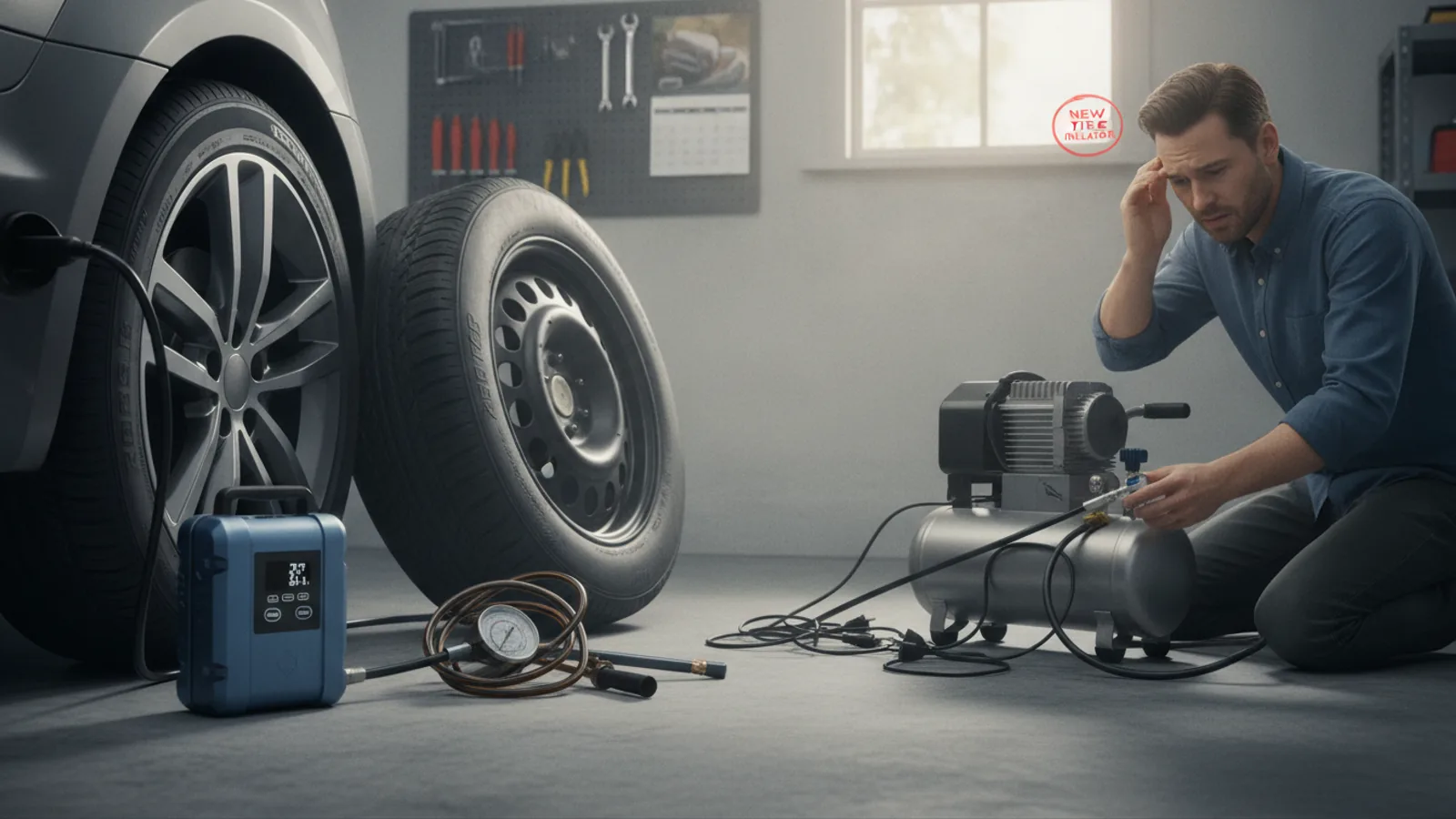
Choosing a portable tyre inflator for home use involves more than picking the first compact model you see. Many people make avoidable mistakes that lead to poor performance, wasted money, or even safety hazards. This guide walks you through the most common planning and selection errors, from ignoring your actual tyre pressure needs to overlooking power source compatibility. You will learn how to assess your vehicle types, usage frequency, and storage constraints before buying. The steps cover practical checks like verifying hose length, pressure gauge accuracy, and duty cycle. By following this structured approach, you can select a reliable inflator that meets your household needs without overpaying or settling for a unit that fails when you need it most.
Fast Answer
- If you only check the maximum pressure rating, you might select a unit that cannot handle your daily driver's needs or that overheats on larger tyres; instead, match the inflator's continuous output to your most demanding tyre and note its duty cycle.
- The most common mistake is ignoring the power source: a 12-volt inflator can struggle with a cigarette lighter socket that has a low fuse rating, causing blown fuses or slow inflation; confirm your vehicle's socket rating and use battery clamps or a separate battery when in doubt.
Before You Start
- List every vehicle you own, including cars, SUVs, motorcycles, bicycles, or trailers, and note their recommended tyre pressures from the owner's manuals or door stickers.
- Decide where you will store the inflator: determine if it needs to fit in a glovebox, under a seat, or in a trunk organizer, and measure the available space.
- Identify the power outlets in each vehicle: check if they have 12-volt sockets, USB-C ports, or whether you will rely on a home wall outlet, and note the amperage ratings.
- Estimate how often you check or adjust tyre pressures and whether you might need to inflate a completely flat tyre occasionally, as this affects the required duty cycle and power.
Step-by-Step Instructions
Assess Your Actual Tyre Pressure Needs
Start by writing down the recommended tyre pressure for every vehicle you own. Look at the sticker on the driver's side door jamb or in the owner's manual, not the number molded into the tyre sidewall, because that is the maximum, not the recommended setting. For example, a typical car might need 32 psi, while an SUV or van could require 40 psi or more. Also think about whether you have bicycles or trailers that need much lower pressures, like 20 psi. This step is critical because inflators list a maximum pressure rating, but they often provide a lower continuous output. A unit that claims a maximum of 100 psi might still struggle to reach 40 psi quickly. Note the highest pressure you will need and the frequency of use. If you only top up once a month, a basic unit works, but if you deal with seasonal temperature changes or frequent long trips, you need a more robust model. By understanding the pressure range and your usage pattern, you avoid buying an underpowered inflator that takes forever or an overrated one that is bulky and expensive. This assessment also helps you choose a unit with an accurate gauge, because overinflation can cause premature tyre wear or blowouts.
Choose the Right Power Source and Cord Length
Decide whether you will power the inflator from your vehicle's 12-volt socket, a separate battery with clamps, or a home outlet. Many portable models are 12-volt only, so verify that your vehicle's socket can handle the current draw. Most cigarette lighter sockets have a 10-amp fuse, but some require 15 amps, and using a high-draw inflator can blow the fuse. Look at your vehicle manual or the socket cover to see the rating. Also consider the cord length: if your car is long or you need to reach a trailer tyre, a short cord forces you to buy an extension, which adds resistance. Measure the distance from the socket to each tyre, especially the rear tyres, and add a bit of slack. If you plan to use it at home, check whether the inflator comes with a power adapter or if you need to buy one. Some units have built-in batteries that you charge indoors, but those are heavier and cost more. For a reliable home use, a corded 12-volt model with at least a 3-meter power cord and a 3-meter air hose is often best. Before finalizing, check if the air hose reaches all tyre valves without stretching, because a too-short hose makes the job awkward and increases the risk of damaging the valve stem.
Evaluate the Duty Cycle and Motor Quality
Examine the inflator's duty cycle, which is the ratio of running time to rest time. For example, a unit with a 30% duty cycle can run for 3 minutes and then needs 7 minutes to cool down. If you often inflate from flat or have large tyres, a short duty cycle means you will spend a lot of time waiting. Look for a unit with at least a 15-amp motor if portability allows, but note that higher power often increases weight. Also consider the motor type: brushed motors are common but wear out faster, while brushless motors last longer but cost more. Check if the unit has thermal overload protection, which automatically shuts off before overheating, preventing damage. For home use, you likely need to inflate a tyre by 10 to 15 psi, which takes a few minutes, so a 20% duty cycle might be enough. However, if you have a truck or a flat tyre, you need a higher duty cycle to avoid overheating. Also listen to the motor sound in product videos or reviews; a strained sound indicates a weak motor. A good way to test this before buying is to look for reviews that mention continuous use or multiple tyres in one session, as they reveal real-world performance.
Check the Pressure Gauge Accuracy and Features
The gauge is your only way to know when the tyre reaches the correct pressure, so its accuracy is non-negotiable. Many budget inflators have analog gauges that are hard to read and often off by 2 to 3 psi, while digital gauges are easier to read but can also be inaccurate. Look for a unit with a gauge calibrated to within 1 psi, and if possible, compare it against a known-good gauge after purchase. Also notice the gauge's placement: if it is on the body, you might have to bend down to see it, which is uncomfortable. Some inflators have a built-in light or a backlit screen, which is helpful at night. Additionally, consider whether the unit has an auto-stop feature that shuts off at your preset pressure. While not essential, this prevents overinflation, especially if you are distracted. However, auto-stop relies on a pressure sensor, which can drift over time, so periodically check with a separate gauge. For the most accurate control, you can also buy a small pen-style digital gauge to double-check the reading after using the inflator. This step is important because incorrect pressure shortens tyre life and increases fuel consumption, so investing in a reliable gauge is worth the extra cost.
Consider the Portability and Storage Space
Think about where you will keep the inflator and how often you will carry it. A bulky unit with a built-in battery and a heavy motor takes up valuable trunk space, while a compact one might fit in a glovebox. Measure your vehicle's storage areas and compare them to the inflator's dimensions. Weight matters too, especially if you have a history of back issues, because you might have to lift it from the trunk and carry it around. Some inflators come in a zippered case that adds bulk, so consider if the case is necessary. Also think about the air hose and power cord: can they be stored securely without tangling? Some units have a wrap-around cord design that keeps everything tidy. If you have a motorcycle or a bicycle, a small inflator with a short hose might be enough, but you still need power. For home use, you might not bring it in the car, but then you need a power adapter for the wall outlet. Ultimately, choose an inflator that you will actually use; if it is too heavy or awkward, you will not bother to pull it out when you need it. Prioritize a balance between power and portability based on your typical usage.
Review the Included Nozzles and Accessories
Check what nozzles and adapters come with the inflator, because you might need to inflate more than just car tyres. A unit that only has a screw-on tyre chuck is fine for cars, but if you need to inflate a bicycle tyre, a Presta valve adapter is essential. Likewise, an inflatable pool toy or an air mattress requires a needle nozzle, so see if those are included. Some inflators have a universal 'quick-connect' system that makes changing accessories easy, while others require you to unscrew and screw on each part. Also inspect the quality of the hose connection: it should be a tight fit on the valve stem to avoid air leaks. A leaky connection makes the inflator work harder and gives inaccurate pressure readings. Additionally, look for a built-in LED light or a storage bag, but do not let these features distract you from the core function. Make a list of every item you plan to inflate and verify that the included accessories cover them. If not, factor the cost of buying additional adapters into your decision. This prevents frustration later, as you do not want to discover you cannot inflate your bicycle tyre on a Sunday morning when the shop is closed.
Quick Reference
| Situation | Action | Why it helps |
|---|---|---|
| You have a large SUV with tyres that need 40 psi, and you often inflate them after winter. | Choose an inflator with a maximum pressure of at least 60 psi, a duty cycle of 40% or higher, and a digital gauge with auto-off at 40 psi. | A higher max pressure gives headroom for the motor, and a better duty cycle lets you run it long enough to add 10-15 psi without overheating. |
| Your car's 12-volt socket only supports a 10-amp fuse, and you do not want to blow it. | Select an inflator that draws no more than 9 amps, or use the battery-clamp adapter that connects directly to the battery rather than the socket. | Most socket fuses can handle 10 amps, but an inflator drawing 12 amps will trip the fuse, leaving you without power and without a tyre inflated. |
| You plan to inflate a bicycle tyre with a Presta valve, but most inflators come with a standard chuck. | Buy an inflator that includes a Presta adapter, or purchase a separate adapter that screws onto the Presta valve before attaching the hose. | Without the right adapter, the inflator's chuck will not seal, causing air to leak out and making the compressor run continuously without inflating. |
Common Issues
- The inflator blows a fuse in the cigarette lighter socket every time you use it.: Check the fuse rating in your owner's manual; if it is 10 amps, switch to the battery clamp that connects directly to the battery, or use a 12-volt extension cord with a higher amp rating, such as 15 amps. Also confirm the inflator's current draw is below the socket's fuse rating.
- The digital gauge displays a different pressure than a separate manual gauge, and you are unsure which is correct.: Test the inflator's gauge against a high-quality dial gauge at a petrol station or a tyre shop; if the difference is more than 1 psi, adjust your setting to compensate. If the inflator has a calibration feature, use it, otherwise note the offset and rely on the manual gauge for accuracy.
- The inflator gets extremely hot after just a few minutes of use and turns off by itself.: Let it cool down fully before resuming, and reduce the number of consecutive inflations. Check if the duty cycle is listed; if not, assume a 2-minute on, 5-minute off pattern. If it still overheats, consider a more powerful model with a higher duty cycle.
Advanced Tips
- Check your tyre pressure at least once a month, as tyres naturally lose air; this reduces the chance of running on an underinflated tyre and prevents unnecessary fuel consumption, and it saves you from relying on the inflator in an emergency.
- When storing the inflator for a long time, keep it in a dry, climate-controlled area, and avoid leaving it in a car boot where extreme temperatures can crack the plastic or degrade the hoses.
- If you live in a cold climate, note that tyre pressure drops by about 1 psi per 5°C, so you may need to adjust the target pressure and use the inflator more frequently in winter.
Final Checklist
- I have written down the recommended tyre pressures for all my vehicles and compared them to the inflator's maximum and continuous output.
- I have verified that the power cord and air hose reach the furthest tyre without needing an extension, and that the power source can handle the inflator's current draw.
- I have confirmed the inflator's duty cycle is sufficient for my typical inflation time, and I have planned to let it cool down between consecutive tyres.
- I have checked that the gauge is accurate to within 1 psi, and I have a spare manual gauge for double-checking.
FAQ
How often should I replace my portable tyre inflator?
There is no set replacement interval, as it depends on usage and build quality. A typical inflator lasts several years if you do not overwork it. However, inspect the power cord and air hose regularly for cracks, and check the motor's performance. If the unit struggles to reach pressure quickly, or if the gauge drifts significantly, it may be time to replace it. To extend its life, follow the duty cycle, store it in a cool dry place, and avoid kinking the hose.
Can I use my portable tyre inflator for other inflatables like air mattresses or beach balls?
Yes, most portable inflators come with various nozzles, including a needle for balls and a larger cone for air mattresses. However, inflating a large air mattress uses a high volume of air and can take a long time, potentially overheating the motor. Check your inflator's duty cycle and let it cool down frequently. Also, ensure the nozzle fits securely to avoid leakage. For large items, a dedicated electric pump is often more efficient, but a portable inflator works in a pinch if you are patient.
Is a digital gauge always more accurate than an analog one?
Not necessarily. Digital gauges are easier to read, but their accuracy depends on the sensor and calibration. Cheap digital units can be off by 2-3 psi, while a high-quality analog gauge can be very accurate. The best approach is to test any inflator's gauge against a known-accurate gauge. Look for inflators that advertise calibration or a stated accuracy of ±1 psi. Also, digital gauges can be affected by cold temperatures, so if you inflate in winter, consider a model with a robust sensor.