Common Mistakes When Planning Checking Wheel Alignment After Pothole Damage
A practical step-by-step guide to common mistakes when planning checking wheel alignment after pothole damage, including preparation, instructions, common issues, tips, and next steps.
Common Mistakes When Planning Checking Wheel Alignment After Pothole Damage
This guide explains common mistakes people make when planning to check wheel alignment after hitting a pothole. It covers why you should not delay the check, how to prepare your vehicle properly, and what to look for during the inspection. You will learn the correct steps to take, from a visual check to a professional measurement, and how to interpret the results. Also included are quick reference situations, common issues with fixes, advanced tips, a final checklist, and frequently asked questions to help you avoid costly tire wear and unsafe driving conditions.
Fast Answer
- Do not assume the alignment is fine just because the car drives straight; a pothole can shift the suspension geometry without obvious symptoms.
- Take your car to a professional alignment service soon after the pothole hit, even if you do not notice immediate problems, because damage may worsen over time.
Before You Start
- Park your vehicle on a level surface and ensure the tires are inflated to the recommended pressure, because incorrect pressure can affect alignment readings.
- Gather the vehicle owner's manual and any previous alignment reports, as they provide baseline specifications and help you compare before and after measurements.
- Remove heavy items from the trunk or cargo area, because extra weight changes the ride height and can skew the alignment check results.
- Inspect the tires for obvious damage like cuts, bulges, or uneven wear, and note any issues to discuss with the technician during the alignment service.
Step-by-Step Instructions
Do a Visual Inspection Before Any Appointment
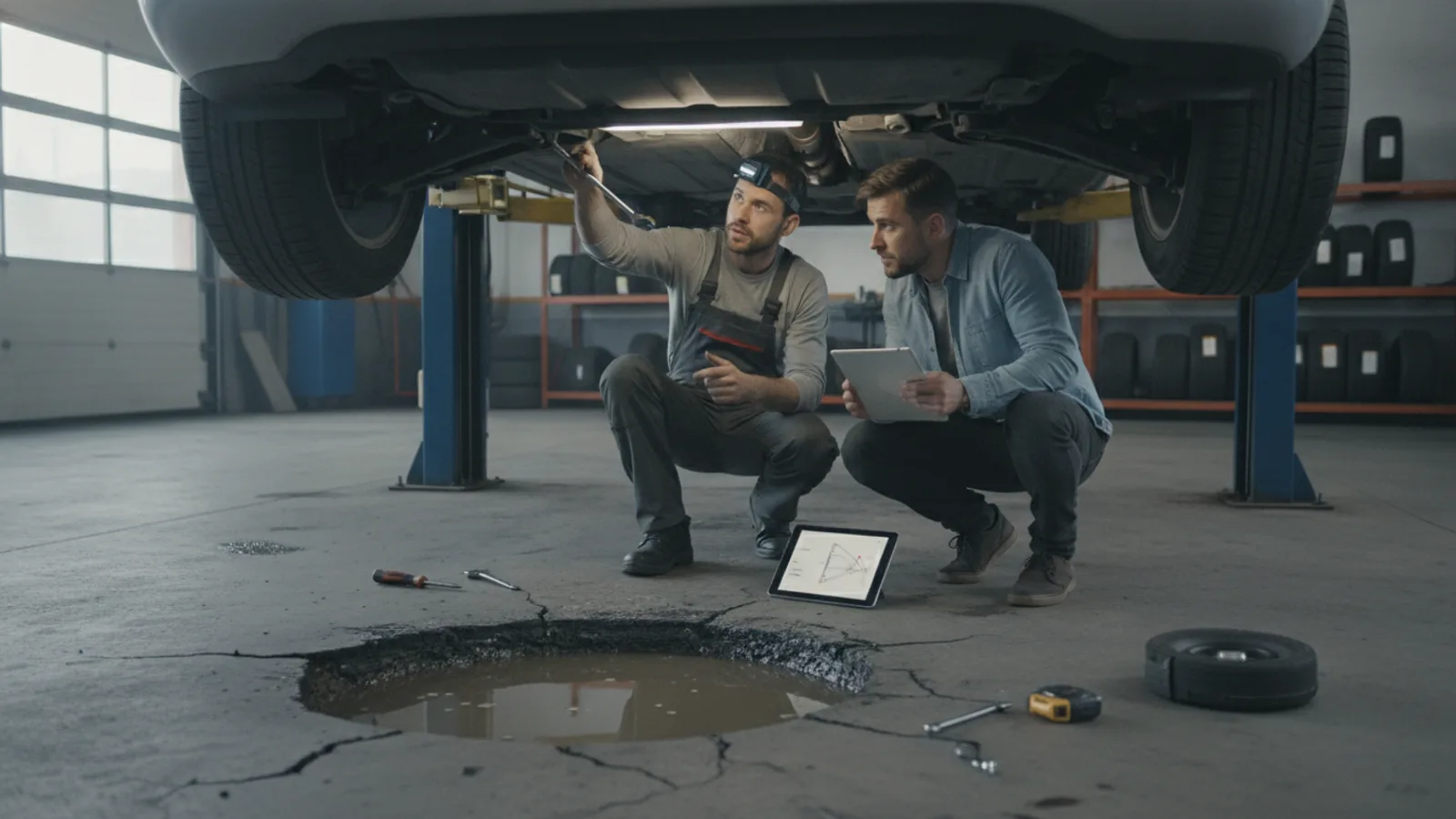
Before you even schedule an alignment service, take a close look at the front and rear of the vehicle to spot any obvious signs of pothole damage. Crouch down and check for bent rims, cracked wheel spokes, or missing wheel weights. Examine the tires for sidewall bubbles, cuts, or uneven tread wear, which often appear as bald patches on one edge. Look underneath the car for dripping fluid, bent tie rods, or loose rubber bushings. If you see any of these, do not drive the car until a professional inspects it. This visual check helps you decide whether you need a simple alignment or a more complex suspension repair, and it prevents you from wasting time and money on a service that may not fix the root cause. Even if everything looks fine, proceed to the next step because visual damage is not always obvious.
Drive the Vehicle and Note Any Pulling or Vibrations
Take the car for a slow, safe drive on a flat, quiet road to test how it behaves after the pothole impact. Pay attention to whether the steering wheel is centered when you drive straight, or if it tilts to one side. Notice if the car pulls left or right without you turning the wheel, and feel for vibrations in the steering wheel or the driver's seat, especially at moderate speeds. Also, listen for unusual humming or clicking sounds from the tires. These symptoms can indicate not only misalignment but also a bent wheel or damaged suspension component. After the drive, park and touch the wheels gently to see if any are hotter than others, which could suggest brake drag. Write down exactly what you feel and hear, because this information is valuable to the alignment technician. It helps them diagnose the issue more accurately and ensures they don't just fix the alignment angles while ignoring a brake problem.
Schedule a Professional Alignment as Soon as Possible
Even if the car seems fine after the pothole, put the alignment appointment on your calendar without delay, ideally within a day or two. The sooner you have the alignment checked, the less risk you have of uneven tire wear that can become permanent and unsafe. When calling the service center, tell them you hit a pothole and describe any symptoms you noticed. Ask if they use a modern alignment machine that measures all four wheels, and confirm that they will provide a printout of the before and after readings. While waiting for your appointment, avoid long highway drives and any heavy hauling, as these can accelerate damage. If you notice any new noises or sensations, stop driving and re-inspect. This step is crucial because misalignment is often progressive; a small deviation left unaddressed can lead to premature tire wear, increased fuel consumption, and stress on the suspension components.
Ensure the Shop Meets the Correct Pre-Alignment Conditions
When you bring the vehicle in, confirm that the technician will check the tire pressures and adjust them to the manufacturer's specification before putting the car on the alignment machine. The car must be empty of any heavy cargo and have the correct ride height; if you have modified the suspension or added spacers, tell the technician because that changes the alignment specs. Also, ensure the shop has the exact alignment specifications for your vehicle's year, make, and model, not a generic setting. The technician should check the condition of the steering and suspension components, like tie rods, ball joints, and control arms, and replace any worn parts before aligning. If they skip these steps, you could get an alignment that is accurate on paper but still causes uneven tire wear because the underlying parts are loose or damaged. This step helps avoid the common mistake of aligning a car that needs mechanical repair first.
Read the Before and After Alignment Report Carefully
After the alignment is done, the technician should hand you a report that shows the measured angles for each wheel—camber, caster, and toe—before and after adjustments. Compare the after readings to the factory specification range listed on the report. Look for any angles that are still outside the range; if you see them, ask the technician why and what they did about it. Ensure the report indicates that the rear wheels were aligned too, not just the front, because a pothole can knock the rear alignment out. Understand what each angle means: camber is the tilt of the wheel when viewed from the front, caster is the steering axis angle, and toe is the degree the tires point in or out. If the report shows the before readings were way off, that explains why your car pulled or wore tires unevenly. This step ensures you are not paying for a service that did not actually correct the issue.
After the Alignment, Monitor Your Vehicle’s Behavior
Once you drive away from the shop, pay attention to how the car handles over the next few days. It should drive straight with a centered steering wheel, and you should not feel vibration or pulling. If any symptom persists, go back to the shop immediately and ask them to recheck the alignment and suspension components. Also, keep an eye on the tires for the next few weeks; run your hand over the tread from time to time to feel for new wear patterns. After about 500 miles, you can optionally have the alignment checked again to ensure nothing has shifted, especially if you frequently drive on rough roads. This post-alignment observation is crucial because even perfect alignment can be undone by another pothole or a loose bolt that wasn't torqued to spec. Catching problems early prevents costly tire replacement and keeps you safe.
Quick Reference
| Situation | Action | Why it helps |
|---|---|---|
| After hitting a pothole, the car pulls to the right even after a visual inspection shows no damage. | Schedule a professional four-wheel alignment immediately and mention the pulling to the technician. Do not just rotate tires or adjust pressure by yourself. | A pull typically means the alignment angles are off, and only a machine can measure and correct them precisely; rotating tires or adjusting pressure won't fix geometry. |
| You notice uneven wear on the outer edge of the front tire, with the inner edge still having deep tread. | Book a suspension inspection first, then an alignment. Ask the mechanic to check ball joints and tie rods for any play before aligning. | Uneven edge wear often signals camber misalignment or worn suspension parts; aligning without replacing worn parts will not stop the wear pattern. |
| The steering wheel appears crooked when driving straight, but the car does not pull to either side. | Tell the technician that the steering wheel is off-center and request that they adjust the toe and center the steering wheel during the alignment service. | A crooked wheel indicates that the toe setting is incorrect, and proper adjustment will correct both the steering wheel position and the alignment. |
Common Issues
- Assuming that no dashboard warning light means the alignment is fine.: Most cars do not have a sensor for alignment, so you must rely on physical signs like tire wear and driving feel. Inspect tires monthly and get an alignment check after any significant pothole impact.
- Delaying the alignment because the car seems to drive okay until one day the tire is bald on one side.: Make it a rule to check alignment at the first sign of trouble or after a pothole hit. Even minor misalignment can cause rapid wear in a short distance, so schedule the service within a week at most.
- Choosing a budget shop that only adjusts the front toe without checking rear alignment or suspension health.: Ask the shop specifically if they perform a four-wheel alignment and if they inspect suspension components. If not, go to a full-service shop that provides a printout and checks all angles.
Advanced Tips
- When you hit a pothole, immediately inspect the tire pressure and look for a bulge in the sidewall, then have the wheel balanced and aligned even if the tire looks okay, as internal damage may not be visible.
- Consider having a thrust angle alignment done, which checks that the front and rear axles are parallel to each other, to ensure the car tracks straight and does not cause dog-tracking.
- If you have a vehicle with adjustable rear camber and toe, ask the technician to set the rear alignment to the factory spec, as improper rear alignment can cause the car to pull to one side even with the front perfectly aligned.
Final Checklist
- After a pothole, always do a visual inspection and a test drive before scheduling an alignment.
- When you call the shop, ask for a four-wheel alignment and a printout of the before and after readings.
- Confirm that the technician checks tire pressure, removes cargo, and inspects suspension parts before aligning.
- After the service, monitor the car's handling and tire wear for at least a month, and revisit the shop if any pulling or vibration returns.
FAQ
How long can I drive after hitting a pothole before getting an alignment?
It is best to schedule an alignment within a few days after a pothole, but if you cannot get an appointment, avoid long trips and high speeds. Even a small misalignment can cause rapid tire wear over hundreds of miles, so the sooner you correct it, the less damage you face.
Will a wheel alignment fix the vibration I feel in the steering wheel?
An alignment may address vibration if the cause is uneven tire wear from misalignment, but a persistent vibration after a pothole often means a bent wheel or balance issue. You might need a wheel balance as well, and if the vibration is severe, a tire shop can spin the wheel to check for bends.
Can I check my car's alignment at home with a string and a ruler?
You can measure toe angles with a string, but the process is complex and easy to get wrong because it requires perfect reference points. Camber and caster are nearly impossible to measure accurately without professional equipment. A mis-measurement can lead to incorrect adjustments, so it's safer to rely on a shop with a laser alignment machine.